Every year, the Insurance Institute for Highway Safety (IIHS) gives Top Safety Pick and Top Safety Pick+ designations to the new cars that it deems the safest. These selections are determined via crash test results, headlight ratings, pedestrian and vehicle front crash prevention capabilities, seatbelt reminders, ease of child seat lower anchor and tether installation, and whiplash prevention ratings. A Top Safety Pick+ must receive Good ratings in its small and moderate overlap front crash tests, as well as its side tests. Top Safety Pick+ winners also have Acceptable to Good standard headlights, Good standard pedestrian front crash prevention tech, and Acceptable to Good standard vehicle-to-vehicle front crash prevention tech.
📌 The Core Development
The organization's website lets you see all its best picks at a glance, and while some segments produce more TSP+ worthy products than others, one that produced a surprisingly small pool was the Large SUV class. Filtering for the biggest of sport utility vehicles that met the IIHS' most stringent requirements, just two made the cut for 2026: the Rivian R1S and the Volvo EX90. They're both electric and are classified as luxury vehicles.
🔍 Background & Sector Context
Of the two winners this year, the 2026 Volvo EX90 likely comes as less of a surprise given its brand's extended reputation for safety. Volvo invented the modern three-point seat belt, after all, and gave away the patent to save lives. The EX90 had a bit of a rocky launch last year due to underbaked software, but it's since received a tech overhaul aiming to right those wrongs. In any case, Volvo touts the electric three-row SUV as designed to be "the safest car [it's] ever made," which is a bit like Italy coming out and declaring that one slice of pizza is the most delicious slice it's ever made. In other words, it's probably pretty good.
📊 Industry & Real-World Impact
Safety features include, but aren't limited to, long airbags (referred to as inflatable curtains) that come out of the roofline, front seats designed to protect the spine "during heavy landings," and advanced driver assistance systems that use a combination of cameras, radars, and ultrasonic sensors. The EX90 is offered with a single motor, two motors, or Twin Motor Performance, making 329, 449, and 670 horsepower, respectively. Maximum driving range stands at 305 miles for dual-motor versions, while the single-motor offers 293 miles. The 2026 EX90 starts at $78,090, which includes Volvo's $1,395 destination fee.
⚡ Prefer Visual Stories on Mobile?
Experience this news piece in an interactive 5-slide visual format crafted for mobile devices & Google Discover.
🔮 Strategic Outlook & What Lies Ahead
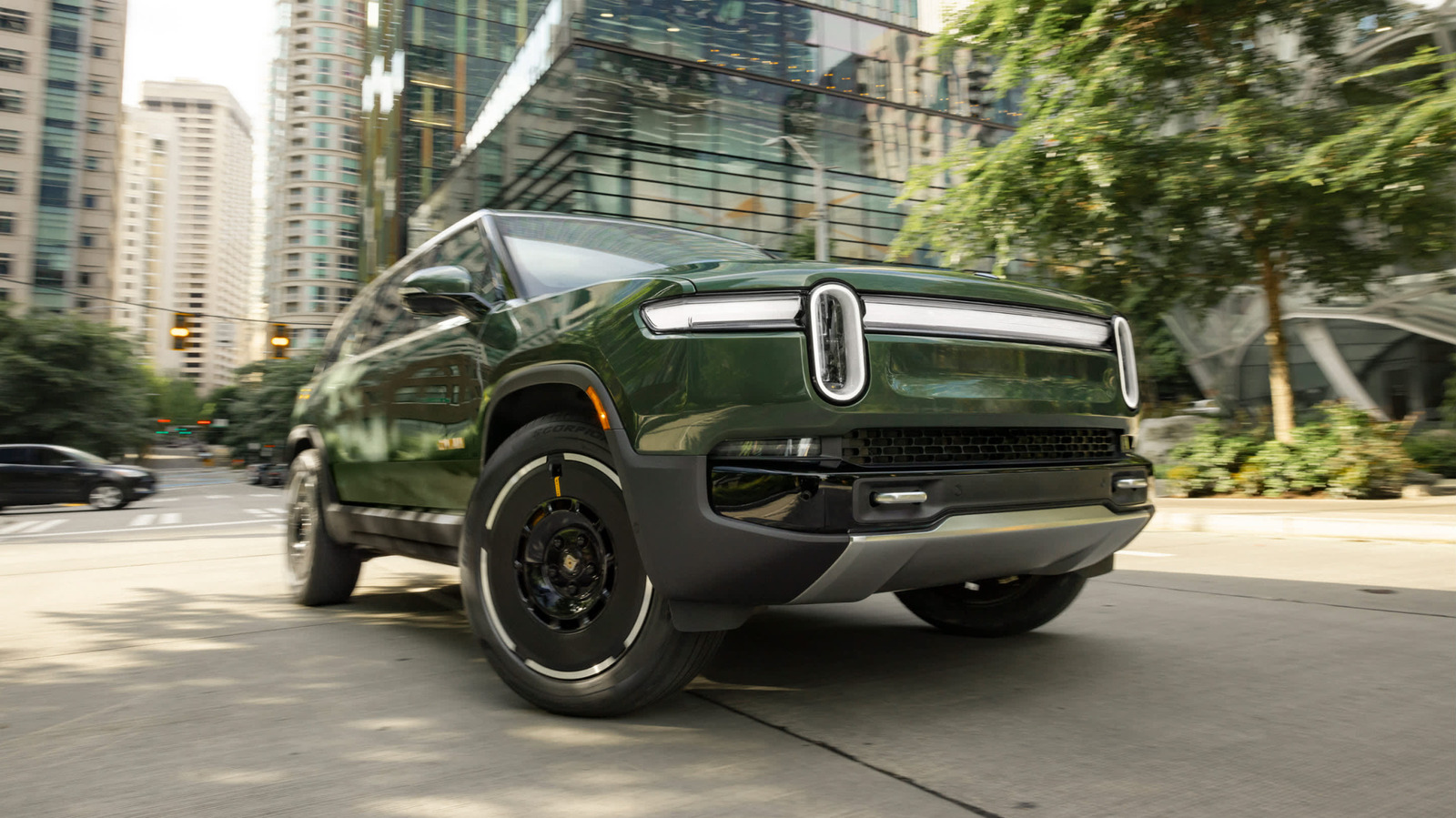
Rivian hasn't been around nearly as long as Volvo has. Still, Rivian's R1S predates the EX90, having been released for the 2022 model year (three years before its Volvo counterpart). Updated in 2025 , the three-row, seven-seat electric SUV is one of the few vehicles from a new, non-Tesla American electric car startup that's actually stuck around. Both 2026 and 2027 R1S models are part of the IIHS' latest Top Safety Pick+ list.
The R1S comes standard with cameras and radars that can "learn and predict the behavior of other cars around you." This setup, which facilitates 360-degree perception, includes 10 high-res cameras, five radars, and the ability to "see" 10 seconds ahead. The optional Autonomy+ suite of assisted driving tech is said to allow hands-free driving "wherever there's a painted or dotted line." For 2027, you can get the R1S with either two, three, or four electric motors , with EV range coming in at 410, 371, and 374 miles, respectively. Horsepower figures register at 665 for dual, 850 for tri, and 1,025 for quad. The 2026 R1S lineup also featured a standard battery dual-motor trim with 329 miles of range and 665 horsepower. The entry-level dual-motor 2026 R1S starts at $85,885, which includes the destination charge.