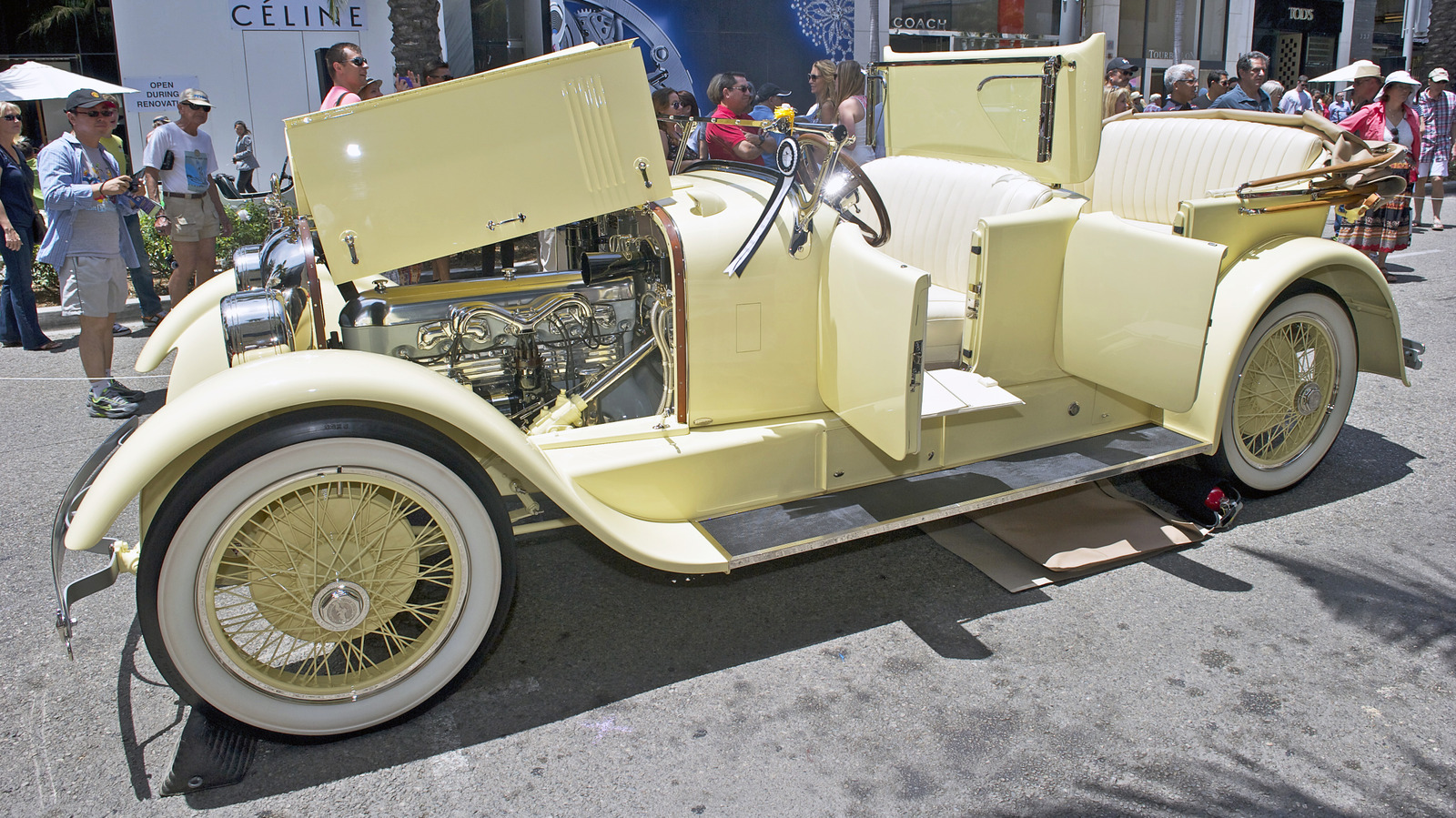
Born in Germany in the late 1870s, the Duesenberg brothers — Frederick (Fred) and August (Augie) – would move to America and make some of the time's most luxurious and innovative cars. One of their earliest ventures included opening a garage in Iowa circa 1903 – which is where they landed after immigrating. During this time, Fred and August were modifying and racing cars.
📌 The Core Development
Now, we're skipping a lot of steps here, but after gaining a reputation as brilliant engineers — and developing motors for the military during World War I – the brothers found themselves in New Jersey. The Garden State proved to be fertile soil for the two, as that's where the first Duesenberg straight-8 engine was created.
Straight-8 power became a defining characteristic of Duesenberg race cars, which in turn became some of the era's most dominant performers. They not only won at Indy — claiming the checkered flag three times during the 1920s — but also at Le Mans.
🔍 Background & Sector Context
Le Mans was where Jimmy Murphy ran away from the field, winning by about 14 minutes over heavily favored early motorsports pioneer Ralph DePalma. Just keep in mind we're talking about the 1921 French Grand Prix here, not the 24-hour endurance race used by the likes of Michelin to refine its tire designs .
A key Le Mans advantage for the Duesenbergs was that their latest cars now sported four-wheel hydraulic brakes. Fred would file patents for his four-wheel hydraulic-brake setup in 1920, with the system being deployed for the brothers' first passenger car a year later. This development made the 1921 Duesenberg Model A the first production car with that particular technology.
📊 Industry & Real-World Impact
While the Duesenberg Model A was the first production-series vehicle with four-wheel hydraulic brakes, the brothers couldn't claim they invented the technology. Let's take a closer look at what preceded the Model A's brakes and how these events influenced the system's design.
⚡ Prefer Visual Stories on Mobile?
Experience this news piece in an interactive 5-slide visual format crafted for mobile devices & Google Discover.
🔮 Strategic Outlook & What Lies Ahead
The first solid evidence of four-wheel mechanical brakes comes with the 1912 Argyll 15 HP, with a system developed by Henri Perrot. The French engineer would earn the first U.S. patent for a four-wheel mechanical brake system in 1913 while working for Argyll.
Next, sources credit a company called Knox Motors with offering a form of hydraulic brakes on the rear wheels of its commercial trucks as early as 1915. Little known today, Knox also built one of the world's first motorized fire trucks.