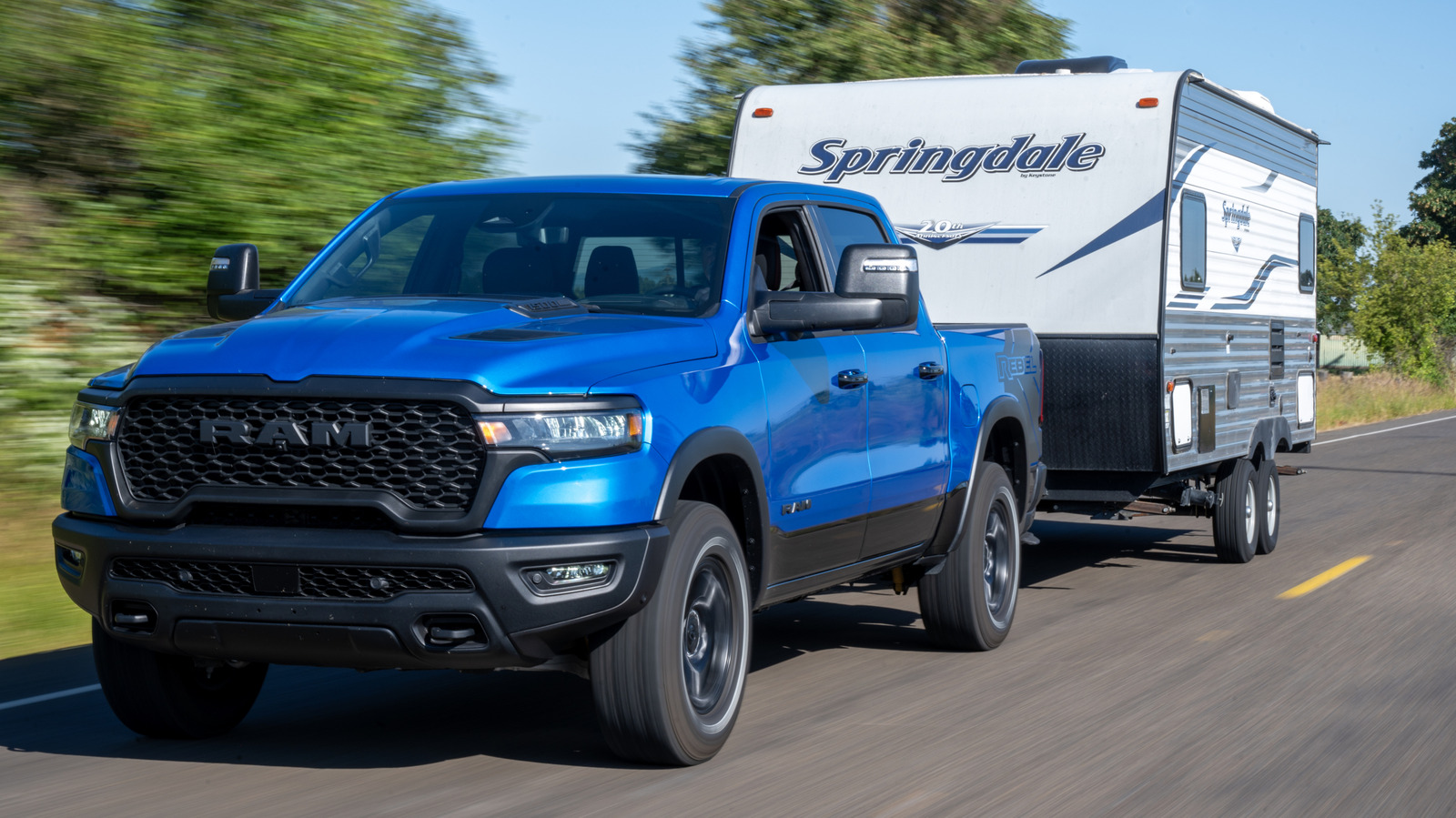
America loves trucks. Whether it's a horse trailer or a 30-foot camper, somebody somewhere in the U.S. is hooking it to a pickup right now. On the surface, a full-size truck and a big SUV look cut from the same cloth: both are built for utility, both sit high, and both can pull a trailer. So why are pickups still chosen for big towing jobs?
📌 The Core Development
The short answer: pickups are designed to tow more, and the proof shows up even when a truck and an SUV share the same bones. J.D. Power notes the Chevrolet Tahoe is "built on the same platform as the Chevrolet Silverado 1500 pickup," yet the 2026 Tahoe tops out at 8,400 pounds while the Silverado 1500 is rated for 13,300 pounds. Ford's lineup tells the same story, with the 2026 Expedition maxing out at 9,600 pounds and the 2026 F-150 at 13,500 pounds. SUVs can tow, but they reach their limits sooner, and Consumer Reports warns against towing "at or near your vehicle's capacity."
In heavy-duty territory, the gap becomes a canyon. With Ford's High-Capacity Gooseneck Tow Package, a 2026 F-450 is rated to pull 40,000 pounds, a figure even new SUVs with impressive towing capacities can't come close to. (The Jeep Grand Wagoneer leads the full-size SUV class at 10,000 pounds, which still leaves it behind most full-size pickups.)
🔍 Background & Sector Context
Truck beds almost never connect to the cab — the two sit on a heavy frame as separate pieces, since a one-piece body would be too stiff to take the twisting that comes with heavy towing. Most SUVs skip that setup. Take Ford's Explorer, a unibody midsize three-row SUV: it's rated to tow 5,000 pounds, less than half of what an F-150 can pull.
Out back, the classic utilitarian pickup recipe calls for leaf springs. It's old-school hardware, and it's stuck around on trucks because it's the better fit for heavy towing. The trade-off is comfort. Most SUVs ride on coil springs, which give passengers a softer ride but aren't usually set up for big towing jobs. Then there's where the weight sits. As The RV Geeks explain, "a truck can carry more weight positioned right above its rear axle," which is where gooseneck and fifth-wheel hitches go.
📊 Industry & Real-World Impact
Ford's Super Duty ratings show the payoff, with the max rating dropping by 10,000 pounds when you swap a gooseneck for a conventional hitch. Trucks tend to offer more specialized towing equipment such as towing mirrors, trailer brake controllers, specialized axle ratios, and heavy-duty cooling systems. They also tend to have a longer wheelbase compared to a comparably sized SUV – this can be a problem in tight parking spots and crowded city streets, but it helps with stability while towing.
⚡ Prefer Visual Stories on Mobile?
Experience this news piece in an interactive 5-slide visual format crafted for mobile devices & Google Discover.
🔮 Strategic Outlook & What Lies Ahead
Lastly, there's the engine. Heavy-duty trucks offer big diesels, and the Super Duty's top option makes up to 1,200 lb-ft of torque — not something you can get in an SUV. Put it all together and a pickup isn't just stronger on paper; it's built around the trailer from the frame up.
In terms of people-hauling, six is the ceiling for a full-size pickup. Big SUVs play a different game. The 2026 Chevy Suburban seats up to nine, and third-row riders get 36.7 inches of legroom. Try fitting a carpool into a crew cab. No pickup offers a third row, so the soccer team is out of luck. Size down to the Honda Pilot, and you can still get up to eight seats.