For the uninitiated, or those who just haven't given much thought to this end of the automotive spectrum, the '60s and '70s muscle car era is chock-full of extra-cool models, trims, engine choices, and more. It can also be incredibly confusing — based on which year, what was available with what, in which color, what particular option, and how do you decipher that through the VIN? On the Chrysler-Plymouth-Dodge Mopar front, there were quite a few combinations that have become immensely iconic. One of them being what one could find on the Plymouth Barracuda, but what's the difference between this epically cool nameplate and just a 'Cuda?
📌 The Core Development
In short, it's like Mopar's answer to the Pontiac Firebird Trans Am, or Chevy Camaro Z28; it was a more enthusiast-geared trim fitted with bodywork, colors, and engines to raise eyebrows (in a good way) and pulses. Let's dig into the badge's origin, when the 'Cuda came along, and what made it a cut above a standard Barracuda.
The Barracuda nameplate itself debuted as a trim of the A-body-based Plymouth Valiant in 1964, featuring sportier bodywork and several engine choices: a 176-cubic-inch slant-six making 145 horsepower, the same cylinder configuration pumped up to 226 cubic inches and kicking out 170 horses, or the 180-horse, 273-cubic-inch V8. It was marketed as a smaller sporty two-door for the masses, and continued on until the generation ceased in 1966. It's important to point out that along the way in 1965, it became the Plymouth Barracuda, no longer marketed as the Plymouth Valiant Barracuda (which was too much to say, anyway). Fun fact: 1965 Plymouth Barracudas can be had for reasonable prices (like, less than $20,000) considering their vintage and prominence.
🔍 Background & Sector Context
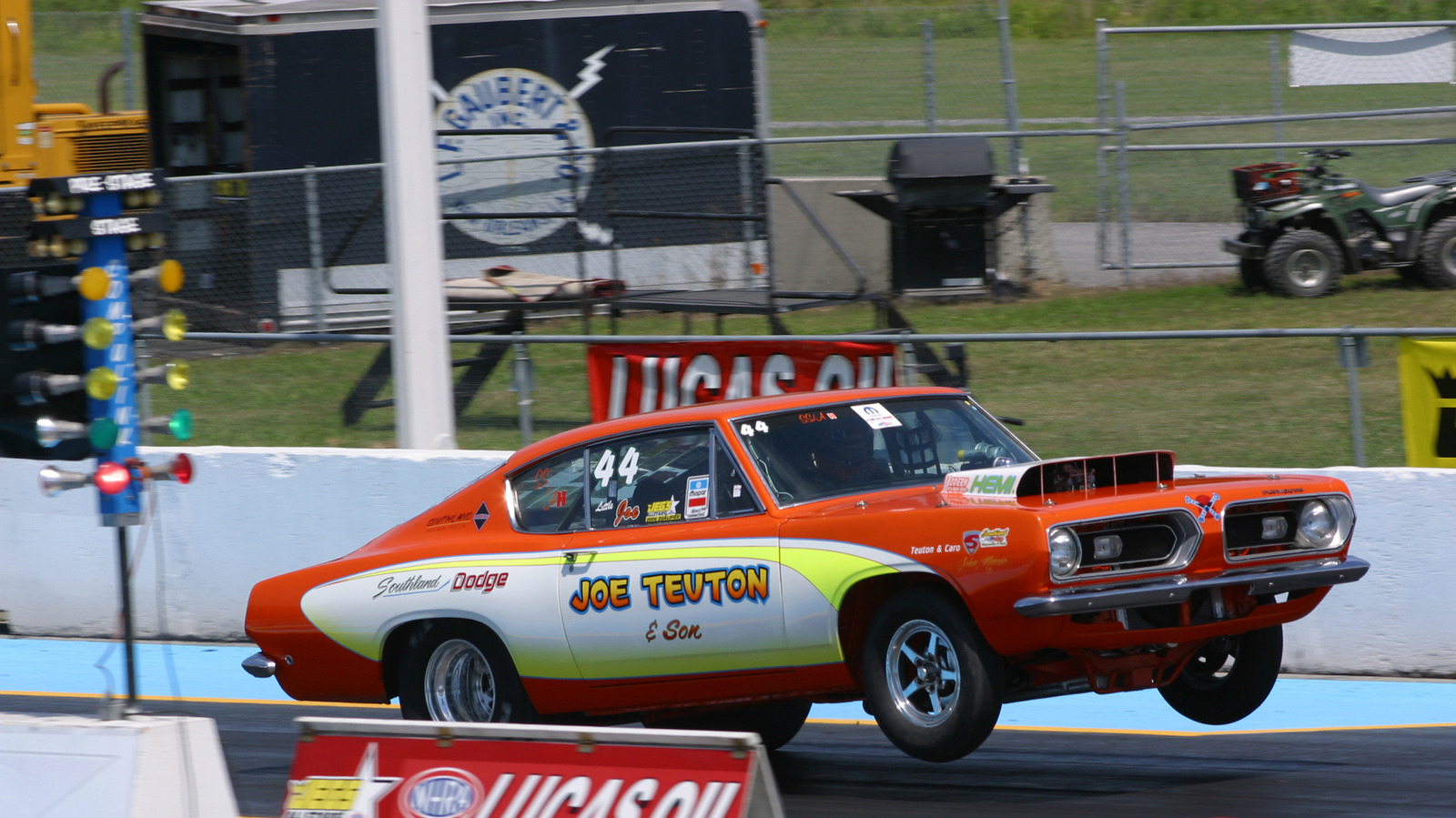
The second generation of the A-body car ran from '67 to '69 and came in three body styles: fastback, notchback, and convertible. This author's favorite is the fastback, thanks to its proportions. Chrysler's 383 cubic-inch V8 was available and made around 280 horsepower, and a very limited-production (i.e. now quite valuable) '68 Super Stock Barracuda with the legendary 426-cubic-inch Hemi V8 also debuted. Otherwise, the 318 was the standard V8 for 1968. A monstrous 440 Barracuda was also available.
The Barracuda truly was the enthusiast-geared trim in 1969, which is proven by its available engines: a 340, 383, and new-for-'68 440 cubic-inch V8. Then, the brand-new third-generation E-body Barracuda — available as either a coupe or a convertible — hit the market in '70. This is when the 'Cuda entered the high-performance limelight, and it got either a 340, 383, 426 Hemi, 440 Super Commando, or 440 Six-Barrel V8. The latter three had suspension upgrades and structural reinforcements to handle their high outputs, which were rated at 425, 375 and 390 hp, respectively. The plain ol' Barracuda just got either one of two sixes, the 318 V8, or the 383. That's it.
📊 Industry & Real-World Impact
'71 was a particularly notable year, as it was the only 'Cuda to get gills (or, front fender louvers). Sadly, it was the last year of the 383, 440, and 426, too — the 340 was the top mechanical dog (displacement-wise) in '72, then the 360 in '73 and '74. The '70 and '71 Hemi 'Cuda is often referred to as the Holy Grail of the lineup as only 780 were sold. The generation then ended.
Benchmark Telemetry & EV Fuel Savings
Put top supercars and EVs to the test in The Pit Stop Lab — launch head-to-head 1/4-mile drag strip battles & compute EPA electric fuel cost savings.
⚡ Prefer Visual Stories on Mobile?
Experience this news piece in an interactive 5-slide visual format crafted for mobile devices & Google Discover.
🔮 Strategic Outlook & What Lies Ahead
The difference between a Barracuda and a 'Cuda, then, comes down to available engines and enthusiast appeal — the gills of '71 definitely stick out the most, and there was a range of loud paint choices — like Lime Light green and Vitamin C orange — a shaker hood (which upped the drama from the driver seat view), and a Pistol Grip shifter on four-speed manual-equipped models. There's more to 'em, too, and they're definitely worth digging into and ogling further.