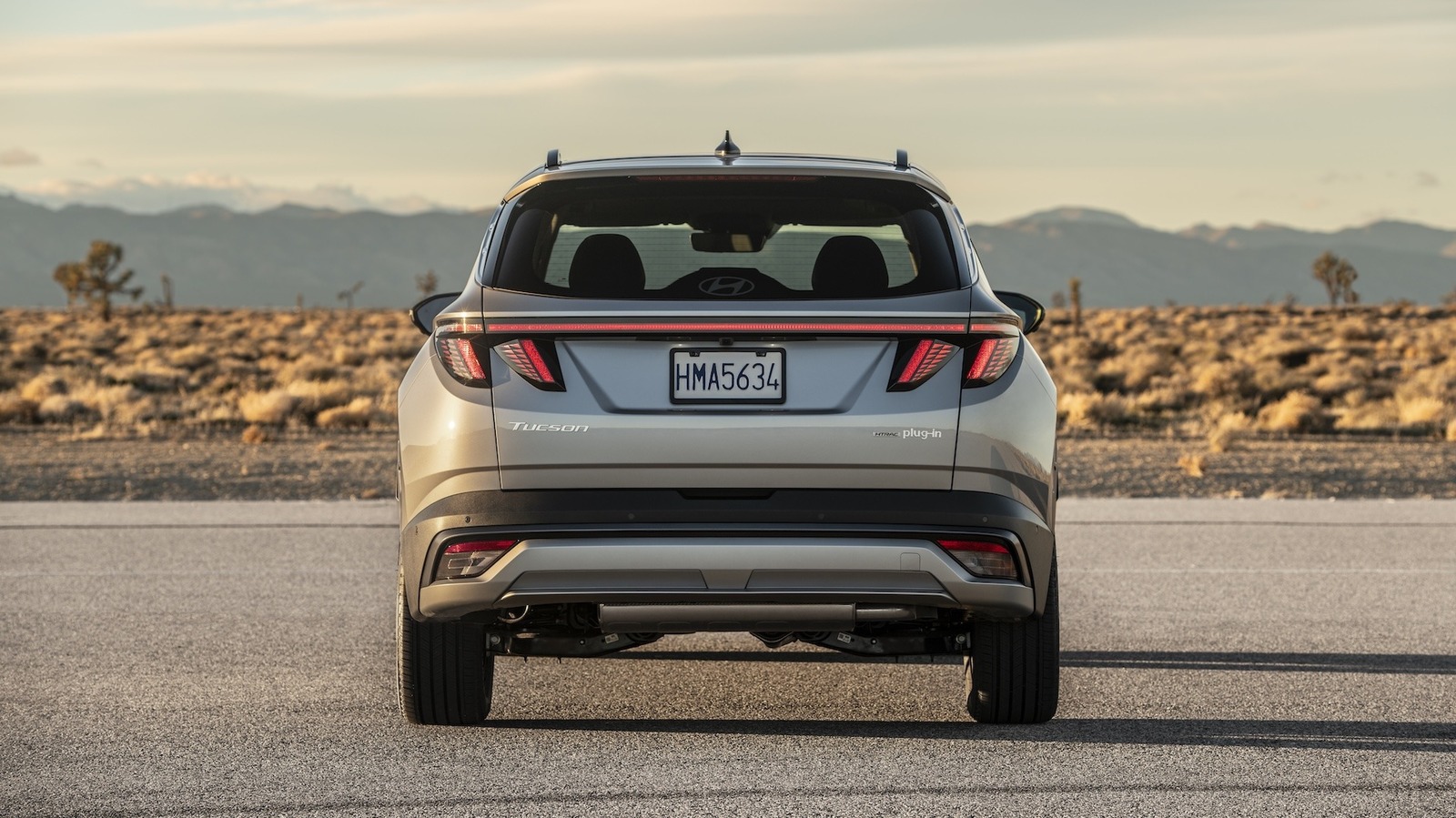
The current Hyundai Tucson compact crossover is available with a pure gas, regular hybrid, or a plug-in hybrid powertrain . If you need every last inch of cargo room, however, the fuel-efficient plug-in may not be the best choice because its cargo area is smaller by almost seven cubic feet. The reason is fairly obvious for those familiar with how electrified cars are built. It's because it has to accommodate the hybrid battery.
📌 The Core Development
Per the official Hyundai specs, the internal combustion and hybrid versions of the 2026 Tucson both have 38.7 cubic feet of SAE-approved cargo room behind the second row of seats. The PHEV, however, has 31.9 cubes, a delta of precisely 6.8 cubic feet or almost 18%. For what we suspect is the same reason, the plug-in hybrid Tucson also gets 1.8 inches less rear legroom than the other Tucsons, measuring 39.5 inches instead of 41.3.
🔍 Background & Sector Context
For what it's worth, Hyundai has already unveiled and is preparing to launch the all-new fifth-gen 2027 Tucson . In certain markets, that one will also be available in three powertrains: gas, hybrid, and plug-in. The latter, however, won't be sold in North America, reportedly due to low demand. On paper, though, the new U.S.-spec Tucson will apparently be bigger than the current one, boasting 41.7 cubic feet of cargo room per Hyundai's current literature.
📊 Industry & Real-World Impact
Industry insights from Jalopnik indicate significant structural shifts underway across the viral drives & concepts landscape.
Benchmark Telemetry & EV Fuel Savings
Put top supercars and EVs to the test in The Pit Stop Lab — launch head-to-head 1/4-mile drag strip battles & compute EPA electric fuel cost savings.
⚡ Prefer Visual Stories on Mobile?
Experience this news piece in an interactive 5-slide visual format crafted for mobile devices & Google Discover.
🔮 Strategic Outlook & What Lies Ahead
Follow-up milestones over the coming days will clarify long-term impacts as reported by Jalopnik correspondents.