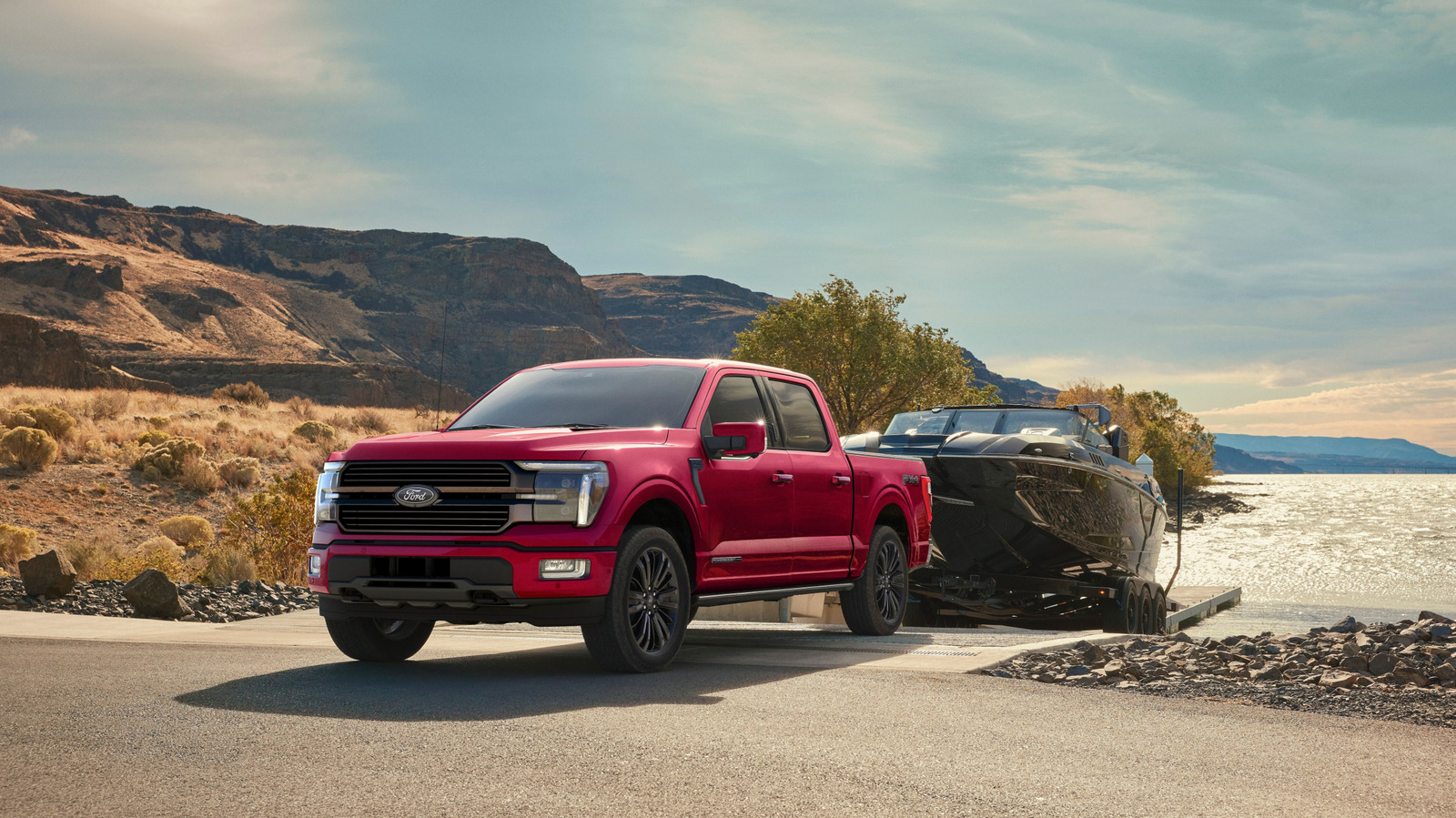
The Ford F-150 just got a mild refresh for 2027 , and the changes are quite minimal compared to the current model. This has not always been the case, since the Blue Oval company has not exactly shied away from experimentation with the F-150 in the past. Ford had been making trucks for a long time, but in the period after the Second World War, the company branded its light-duty trucks as the "F-series" from 1948. Initially, the Ford truck lineup was broken down into the F-1, F-2, and F-3, to represent the half-ton, three-quarter-ton, and one-ton units, respectively. Ford also made progressively heavier trucks right up until the F-8 designation. In '53, the naming for the light trucks was changed to the F-100, F-250, and F-350 for the half-ton, three-quarter-ton, and one-ton rigs, respectively. The F-150 name wouldn't arrive till 1975.
📌 The Core Development
Additionally, Ford transitioned the truck line from the legendary flathead engines to the Y-block overhead valve (OHV) V8s between 1953 and 1954, starting with the 239-cubic-inch V8, followed by a 272-cubic-inch V8 from 1956 onward. The trucks were then redesigned in 1957, 1961, 1967, and 1973 – during this time, the F-series lineup gradually began losing its curves and adopting a squarer, flatter design and fascia. As part of these changes, Ford bounced around between chassis redevelopments and styling updates, offered creature comforts, and introduced new engine choices. For one model year (1956), we also got a fully wrap-around windshield. In 1965, a new trim called the "Ranger" was also introduced, and the I-beam suspension was also introduced that year.
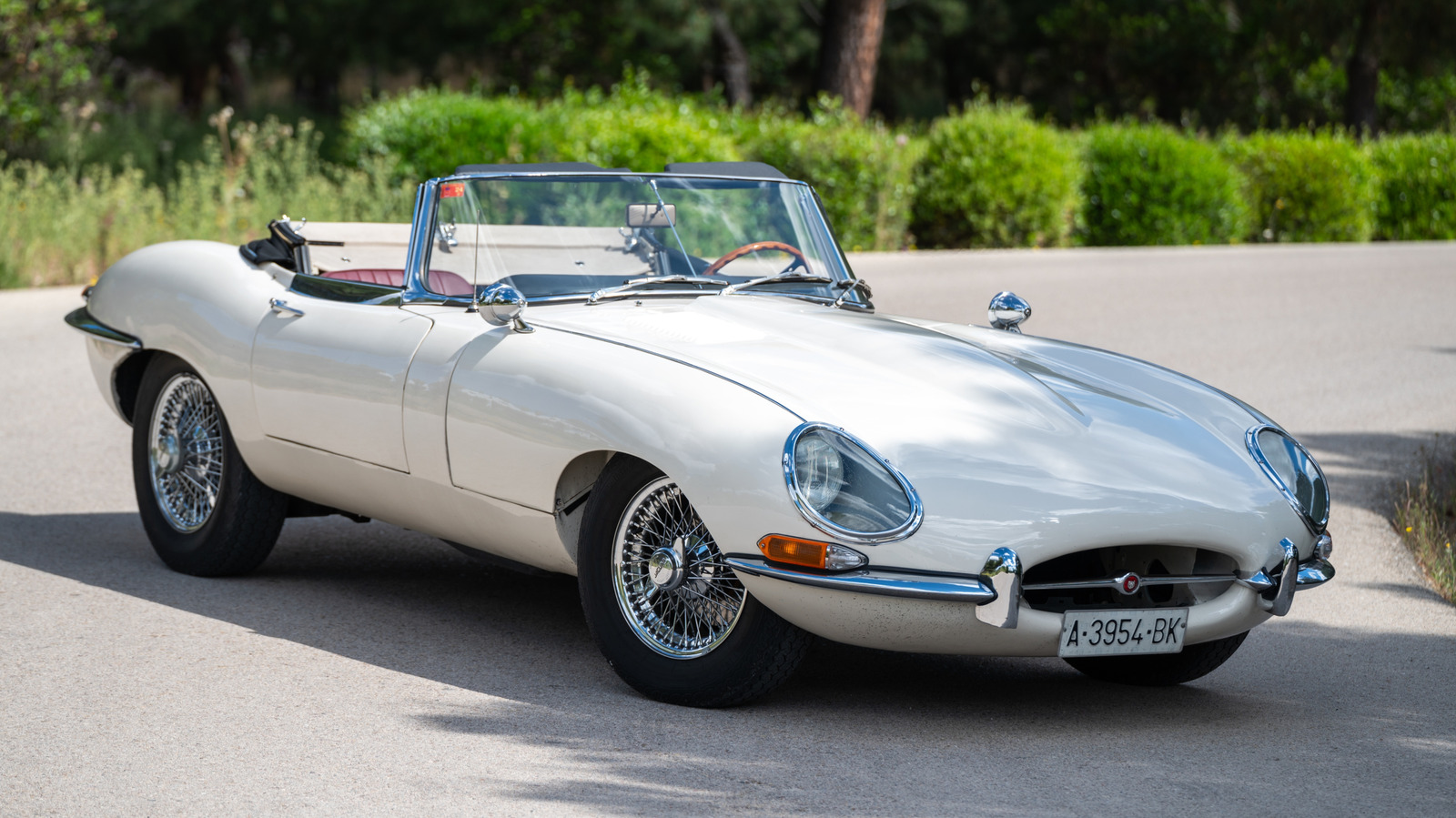
In 1975, Ford came out with the F-150 (1976 model pictured above), which had a heavier gross vehicle weight rating (GVWR) than FoMoCo's other half-ton truck, the F-100. This let the F-150 skirt around emission loopholes, allowing the half-ton truck to be sold without catalytic converters, which the F-100 needed to have. You see, in 1975, the U.S. Environmental Protection Agency (EPA) used to classify vehicles with a GVWR of under 6,000 pounds as being "light-duty" trucks, and in 1975, light duty trucks had to use unleaded fuel and needed cats.
🔍 Background & Sector Context
Ford opted to equip the then-new F-150 with beefier components, giving it a GVWR of 6,050 pounds, compared to the F-100's 5,700 maximum, pushing it past the 6,000-pound threshold by a hair. Additionally, it's worth noting that the original 1975 F-150 only came as a 2WD vehicle, though 4WD was added just a year later, in 1976. And yes, the F-100 doggedly remained on as a model all the way until the 1983 year, which meant that for the better part of a decade, Ford was offering two half-ton trucks.
In '83, the Ford Ranger was introduced (as its own model, not as a trim like it was earlier), and thus, the F-150 completely replaced the F-100 – by then, the F-150 had taken on most of that classic square body shape that we all know and love. The rest, as they say, is history, with the Ford F-150 eventually becoming the best-selling new vehicle in 20 states .
📊 Industry & Real-World Impact
In 1980, the entire lineup got an overhaul. Fun fact: The Ford trucks from 1980 were called "Bullnose" models by some, because of the grille's taper. During the 1980 redesign of the lineup, FoMoCo completely reworked the chassis, making the new trucks lighter. One of the ways in which this was accomplished was by drilling holes into the chassis. However, this "Swiss cheese frame" would later revert to a solid chassis from 1982. Furthermore, the 1980 redesign gave the 4WD models twin traction beam suspension. Essentially, there were two traction beams running inward — one from each wheel (hence, "twin") — while each wheel had a coil for suspension.
Benchmark Telemetry & EV Fuel Savings
Put top supercars and EVs to the test in The Pit Stop Lab — launch head-to-head 1/4-mile drag strip battles & compute EPA electric fuel cost savings.
⚡ Prefer Visual Stories on Mobile?
Experience this news piece in an interactive 5-slide visual format crafted for mobile devices & Google Discover.
🔮 Strategic Outlook & What Lies Ahead
The differential was mounted on the driver side traction beam, and not in the middle like on solid axle units. The 2WD models retained the twin I-beam suspensions in the front, and a solid axle at the rear. That twin I-beam setup had roots going all the way back to 1965, which is when the system was first introduced. For the 1980 redesign, the F-150s continued to use Ford's 9-inch rear axle, while the twin traction beam was from Dana. From 1980 to 1982, the 9-incher was standard, but the 8.8 began making its way into the F-150 from '83. To figure out which axle your truck has, look at the differential cover – 9-inch axles have no cover, whereas 8.8s have a 10-bolt one. It's a shame, because the Ford 9-Inch rear end really still is America's favorite axle .
Starting in 1985, Ford began offering electronic fuel injection — EFI, for short — on the F-150. Initially, EFI tech was offered on the 302-cubic-inch (or 5.0 liter) V8, which bumped power to about 225 horsepower on the high-output version of that engine. By around 1987, the F-150 ditched carbs across the lineup. For trucks made during the period, the F-150 received a few aesthetic changes, chief of which included rounding out of the wheel arches — which were formerly square-ish — and the headlights now sitting flush with the grille.