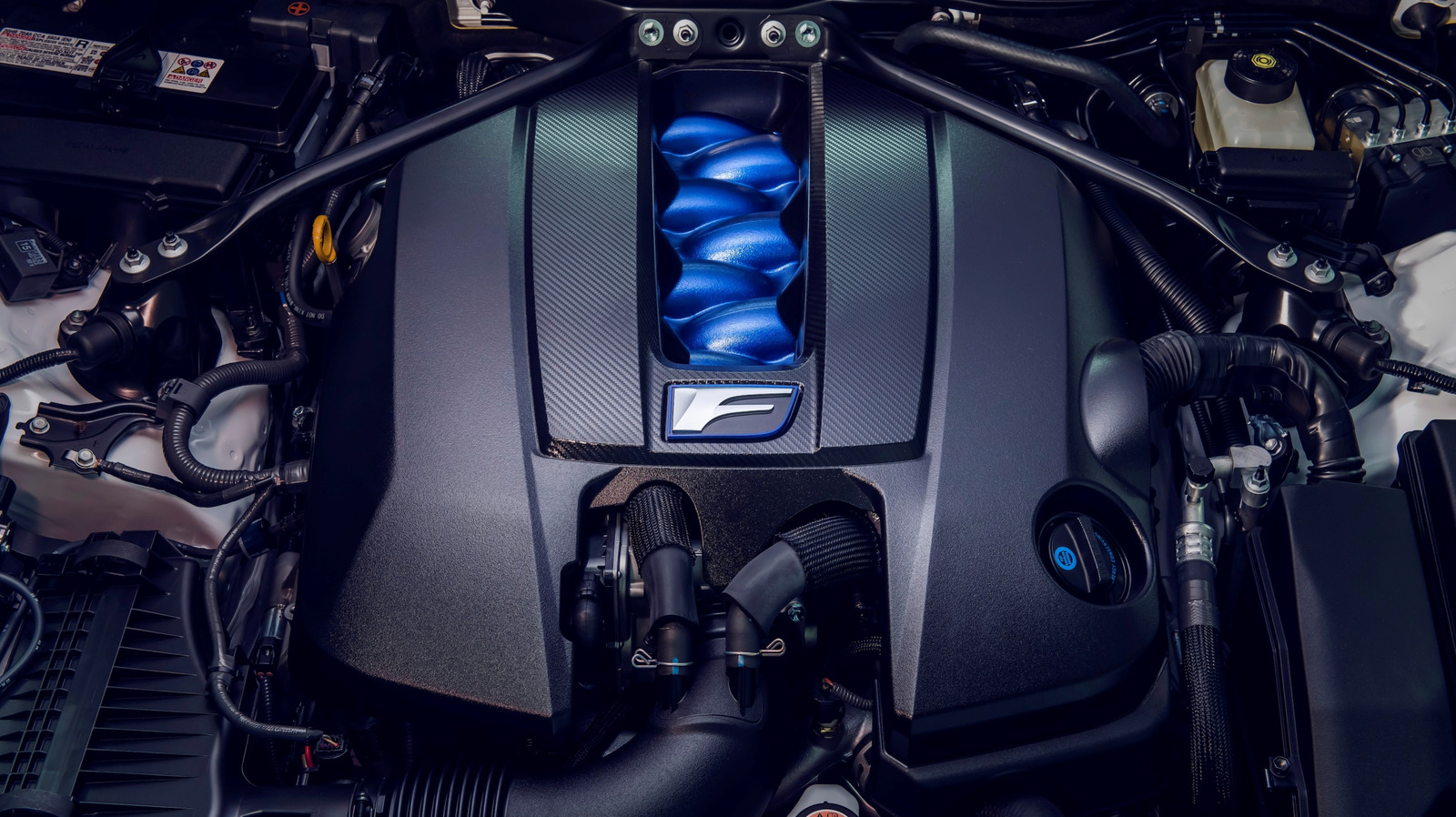
Every gearhead knows reliability is unlikely to be a sore spot when you're dealing with a Lexus. A good chunk of that reputation is understandably tied to its engines, which regularly pass 200,000 miles with nothing more than routine maintenance. However, the same sentiment also extends to the brand's high-performance engines, like the tantalizing 2UR-GSE, a 5.0-liter 32-valve DOHC V8 found in Lexus' now-discontinued performance models like the IS F, RC F, GS F, and ultimate continent-crossing grand touring LC 500 .
📌 The Core Development
The 2UR-GSE V8 made its debut for the 2008 model year in the Lexus IS F, designed to challenge BMW M, Mercedes-AMG, and Audi S performance cars at their own game. To ensure it brought durability along with it, the engineers combined a strong bottom end with a naturally aspirated design, eliminating the additional heat and stress caused by forced induction.
The 2UR-GSE was built using a die-cast aluminum alloy block featuring five main bearings for the forged crankshaft, with each main bearing cap secured by a rare six-bolt design typically reserved for full-on race engines, adding structural rigidity under high loads and high revs. Like most reliable engines, instead of timing belts, it uses timing chains that typically last the entire lifetime of the engine.
🔍 Background & Sector Context
But even so, the 2UR-GSE V8 has a conservative redline of between 6,800 and 7,300 rpm, giving it plenty of headroom to operate reliably. Meanwhile, up top, the aluminum cylinder head was sealed to the engine block with a head gasket constructed from three layers of steel laminate with each gasket including a shim around the cylinder bore to strengthen the seal. Inside, lightweight titanium valves help keep revs high.
The 2UR-GSE V8's design does more than just make it reliable. It also helps it produce serious power without compromising on durability. A blend of its Yamaha-designed, high-flow cylinder head, high compression ratio (initially 11.8:1), dual variable valve timing (VVT-i), and Toyota's D-4S direct and port injection system allows early versions of the 2UR-GSE to produce 416 horsepower and 371 pound-feet of torque in the IS F. Then, following the arrival of the RC F in 2014, power output rose to 467 hp and 389 lb-ft, thanks to a combination of a bigger throttle body (the diameter was stepped up in size from 76mm to 83mm), a revised intake valve with more lift that stays open for longer, as well as redesigned intake ports that move more air through the engine. Lexus also bumped the compression ratio up to 12.3:1.
📊 Industry & Real-World Impact
Fast forward half a decade, and engineers went about uprating the powertrain yet again as part of the sport car's midlife facelift for the 2020 model year, with output rising by 5 hp and 6 lb-ft to 472 hp and 395 lb-ft in total, achieved through better intake routing — enough to make the 2UR-GSE the most powerful V8 engine Lexus ever made .
Benchmark Telemetry & EV Fuel Savings
Put top supercars and EVs to the test in The Pit Stop Lab — launch head-to-head 1/4-mile drag strip battles & compute EPA electric fuel cost savings.
⚡ Prefer Visual Stories on Mobile?
Experience this news piece in an interactive 5-slide visual format crafted for mobile devices & Google Discover.
🔮 Strategic Outlook & What Lies Ahead
Sadly, this version of the engine never went into the original IS F sedan, as it was taken off sale right before even the 467-hp variant of the engine launched for the 2015 model year. Instead, if you're set on a Lexus sports sedan, the Lexus IS 500 F Sport Performance also comes with the same 472-hp version of the 2UR-GSE V8.
While the 2UR-GSE has garnered a reputation for being nearly indestructible, there are still some things to watch out for when buying a used Lexus with this V8 engine. Many expert sources report that problems with the valley plate can occur. For instance, the factory sealant used to bond the valley plate to the engine block can degrade and fail due to repeated heat cycles — although some attribute the issue to the Lexus pink "super long-life coolant". This could lead to coolant leaks and heighten the risk of the engine overheating and ultimately failing. Any issues with the sealant around the valley plate will typically manifest as a puddle of pink coolant under the intake manifold.