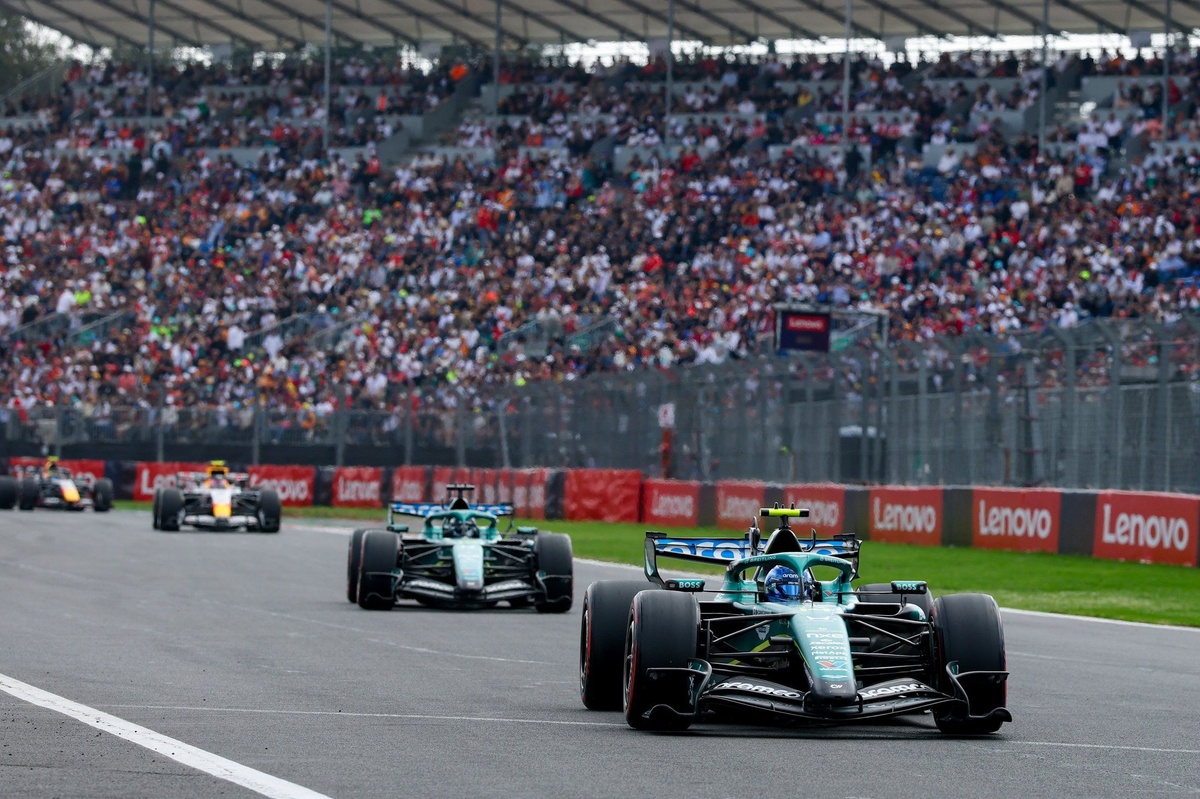
In its Mexico Grand Prix preview, Honda’s Shintaro Orihara had described Autodromo Hermanos Rodriguez as “a very challenging track for the power unit”, but he perhaps didn’t expect Aston Martin’s weekend to go so awry.
📌 The Core Development
Despite decent pace and mileage in free practice – Fernando Alonso was just 0.769s down on pacesetter Charles Leclerc in FP2, with the AMR26s covering a whopping 144 laps across all three sessions – it all went wrong in the competitive sessions.
Honda did fix some driveability and turbo lag issues between FP3 and qualifying, but Alonso encountered “abnormal signals on the water systems” on Saturday afternoon, which didn’t prevent him from outqualifying Lance Stroll ; still, both cars were out in Q1, four tenths down on the Q2 cut-off time.
🔍 Background & Sector Context
In the race, the pair retired after five laps due to cooling issues.
“We knew that with the special high-altitude circumstance of Mexico City, we would face some additional challenges compared to other racetracks for the cooling,” said Orihara, Honda’s trackside general manager and chief engineer, following the race.
📊 Industry & Real-World Impact
“However, we found that our ERS cooling circuit was under heavier stress than anticipated and this is why we had to stop the car in different sessions.
Benchmark Telemetry & EV Fuel Savings
Put top supercars and EVs to the test in The Pit Stop Lab — launch head-to-head 1/4-mile drag strip battles & compute EPA electric fuel cost savings.
⚡ Prefer Visual Stories on Mobile?
Experience this news piece in an interactive 5-slide visual format crafted for mobile devices & Google Discover.
🔮 Strategic Outlook & What Lies Ahead
“Despite completing a series of laps during the practice sessions, the issue occurred today and during qualifying yesterday.
“At each race this year, we need to learn for 2027, even the hard lessons. We have a lot of data that we can bring back to this circuit next year, including on the turbo lag, and we will work on the solutions.”