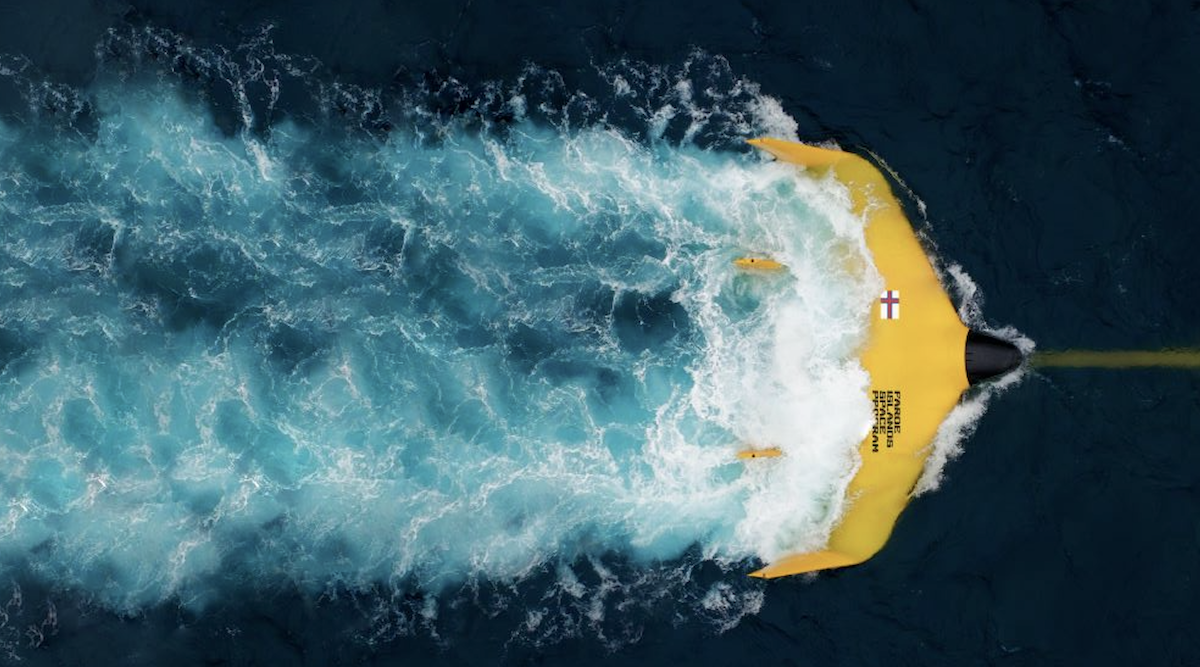

In April 2025, governments at the International Maritime Organization (IMO) agreed on a historic global regulation, the Net-Zero Framework (NZF). It was designed to set global shipping on a course to net-zero by 2050 in a just and equitable way.
📌 The Core Development
Global shipping is responsible for around 3% of global emissions annually, roughly as much as the economies of Germany or Japan.
If the current draft of the NZF were adopted, it would be a historic milestone in two key ways. Firstly, it would set common global targets for the world’s fleet to reduce the carbon intensity of marine fuels. Secondly and more significantly, it could set the world’s first meaningful carbon pricing for a global industry. By collecting fees on any emissions that exceed agreed targets, it would raise $10–15 billion a year, providing financial support for clean fuels and for the sector’s transition in developing countries. Think investments in clean ports, zero-emission ships, and renewable energy production. If a ship reduces emissions enough to meet the targets, it would not have to pay at all.
🔍 Background & Sector Context
While T&E analysis has previously shown that the NZF in itself is not strong enough to reduce shipping emissions at the pace countries agreed to, the agreement set an important global standard for a sector so far exempt from most climate rules.
The IMO’s failure to adopt the NZF as planned in October 2025 was a major upset not only for the industry, lacking the much-needed investment clarity and certainty, but also the world’s most vulnerable states, which lack finance for their energy transition while often facing the worst impacts from climate change.
📊 Industry & Real-World Impact
One of the leading arguments put forward by the NZF opponents, largely oil-producing states led by the US and Saudi Arabia, was that there are regional carbon pricing measures already in place, and adding a global regulation on top would burden the shipping industry twice-over.
⚡ Prefer Visual Stories on Mobile?
Experience this news piece in an interactive 5-slide visual format crafted for mobile devices & Google Discover.
🔮 Strategic Outlook & What Lies Ahead
The EU’s carbon market, the EU ETS, which covers the EU’s share of shipping emissions on its trade routes, was identified by these countries as a barrier to agreement at IMO.
The IMO is expected to discuss adoption of the NZF again in December 2026. But while the blockers are still failing to propose any meaningful compromise, the EU has since proposed important changes to the EU ETS for shipping, addressing the concerns and paving the way for global and regional regulation to co-exist and reinforce each other.