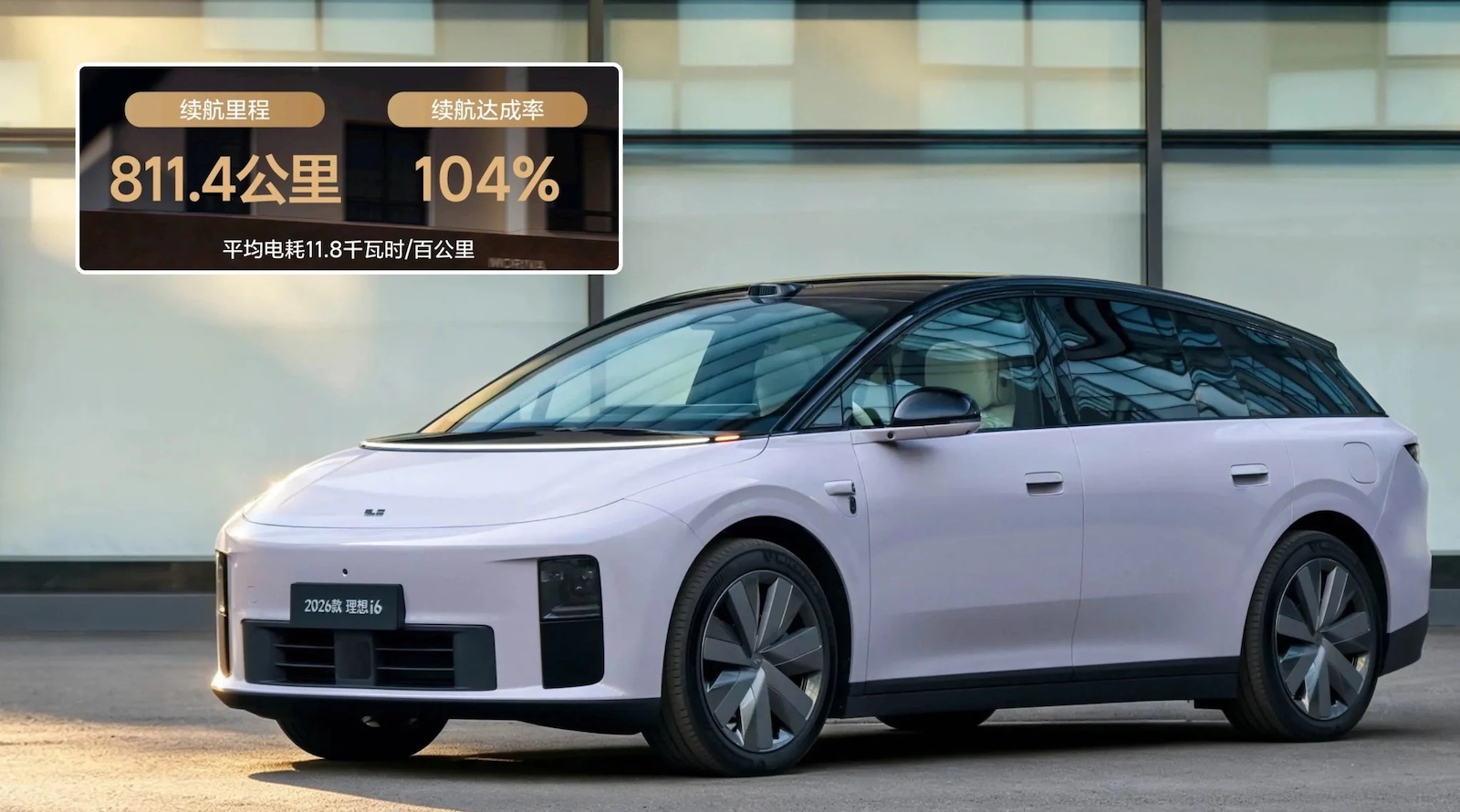
Li Auto’s new i6 electric vehicle has a very interesting look. It makes me think of something out of some futuristic movie or The Jetsons . It certainly has an MPV (multipurpose vehicle) design that is current in China but not really anywhere else. Anyway, aside from the futuristic, cool styling, the new i6 has great specs and features.
📌 The Core Development
The i6 has a CLTC-rated range of 780 km (485 miles), but the company recently livestreamed a drive in which the vehicle drove 811 km (504 miles) before reaching 0%. This was using 11.8 kWh/100 km. The vehicle has a 96 kWh battery.
🔍 Background & Sector Context
Interestingly, Li Auto has shifted away from using CATL batteries. It is using in-house batteries that CALB and Sunwoda helped to manufacture. “ Dian Dong Che Zhu Ren , a Chinese automotive outlet, reports that this design change allows the i6 to carry an extra 3 kWh of cells. It also claims that Li Auto’s latest SiC power modules feature revised current paths that reduce operational losses and add 30 km of winter driving range,” CarNewsChina writes.
📊 Industry & Real-World Impact
“The 5C charging-capable Lian Shan battery is likely to roll out to Li Auto’s existing lineup, and the automaker is also betting big on its safety capabilities. It pledges that Lian Shan packs will never self-ignite or combust in collisions, and like Xiaomi’s Dragonscale batteries, Li Auto is offering up a free new car if they do.”
⚡ Prefer Visual Stories on Mobile?
Experience this news piece in an interactive 5-slide visual format crafted for mobile devices & Google Discover.
🔮 Strategic Outlook & What Lies Ahead
As far as the endurance test goes, it was not one of those hardcore hypermiler attempts. It included realistic use of the car. “Li Auto says it conducted the test around Lake Tai ( Taihu) in the Yangtze Delta, with temperatures between 13 and 20°C. The i6 carried four occupants, their luggage, and 50 kg of additional gear. The automaker stresses that the air conditioning was on during the 18-hour drive,” CarNewsChina adds. The drive occurred in city driving conditions with speed limits between 40 and 80 km/h. So, yes, the car went much further than it would have on the highway driving much faster. Also note that the car didn’t die when it got to 0%. They just stopped the test then, without pushing to see how far the battery buffer from 0% down to dead would take them.