What I don’t know about Finland would fill a small library. As a fan of Formula One, I know that many Finnish surnames have multiple k’s — Mika Hakkinen, and Kimi Raikkonen, for example, not to mention World Rally driver Tommi Makkinen. In the world of motorsports, some like to say, “To finish first, you must first be Finnish.”
📌 The Core Development
It’s also a great place to view the northern lights, and it tends to be cold there. Those low temperatures have attracted data center developers, because keeping warehouses full of computers cool is much easier to do when it is near freezing outside instead of broiling hot.
That is one reason why Google is planning to spend $13 billion building two new data centers in Finland. Things are not going well for Google, however. It started out with the slogan “Don’t be evil,” but has transitioned to being one of the largest invaders of personal space, as it helps governments around the world keep track of citizens who dare to think thoughts not sanctioned by official policy.
🔍 Background & Sector Context
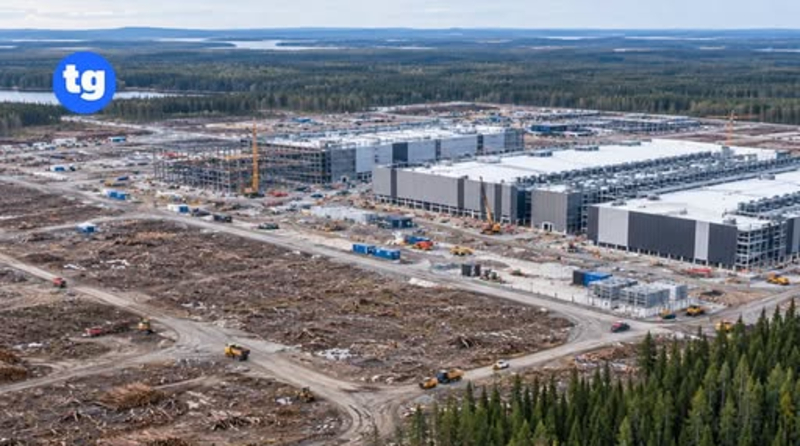
According to The Guardian , the company sparked outrage in Finland after it chopped down about 250,000 trees to make way for its data center in the town of Muhos on the border with Sweden. Then it was revealed it felled another 150,000 trees at another site in Otanmäki, which is located in the southern part of the country. Recently, the Finnish Licensing and Supervision Authority (LVV) ordered Google to stop work on both projects because it failed to complete the necessary environmental impact assessments before clearing the land.
Last week, Antti Järvinen, Google’s manager for operations in Finland, apologized for obliterating nearly 400,000 trees without permission, but claimed the company had acted “on the best understanding we had of the legislation at the time.” In other words, he played the Steve Martin card.
📊 Industry & Real-World Impact
The furor over the trees has forced Finland to take a closer look at its permitting laws and procedures. To be fair, it’s economy is not as robust as some of its European neighbors, and the government had been working diligently to cut expenditures wherever possible. It has also been encouraging foreign investment.
⚡ Prefer Visual Stories on Mobile?
Experience this news piece in an interactive 5-slide visual format crafted for mobile devices & Google Discover.
🔮 Strategic Outlook & What Lies Ahead
When Google announced last month it was prepared to invest $13 billion in the country, prime minister Petteri Orpo said attracting investment was a “top priority” and “the value of the data economy extends far beyond direct investment”. He said the Google deal would “deliver lasting benefits for both parties.”
That’s what political leaders always say, but they seldom talk about the infrastructure costs associated with such economic opportunities. The people putting up the money expect airports, roads, schools, hospitals, and emergency services to be built by the local community, but they never offer to pay for those things, so the costs fall on the shoulders of local residents.