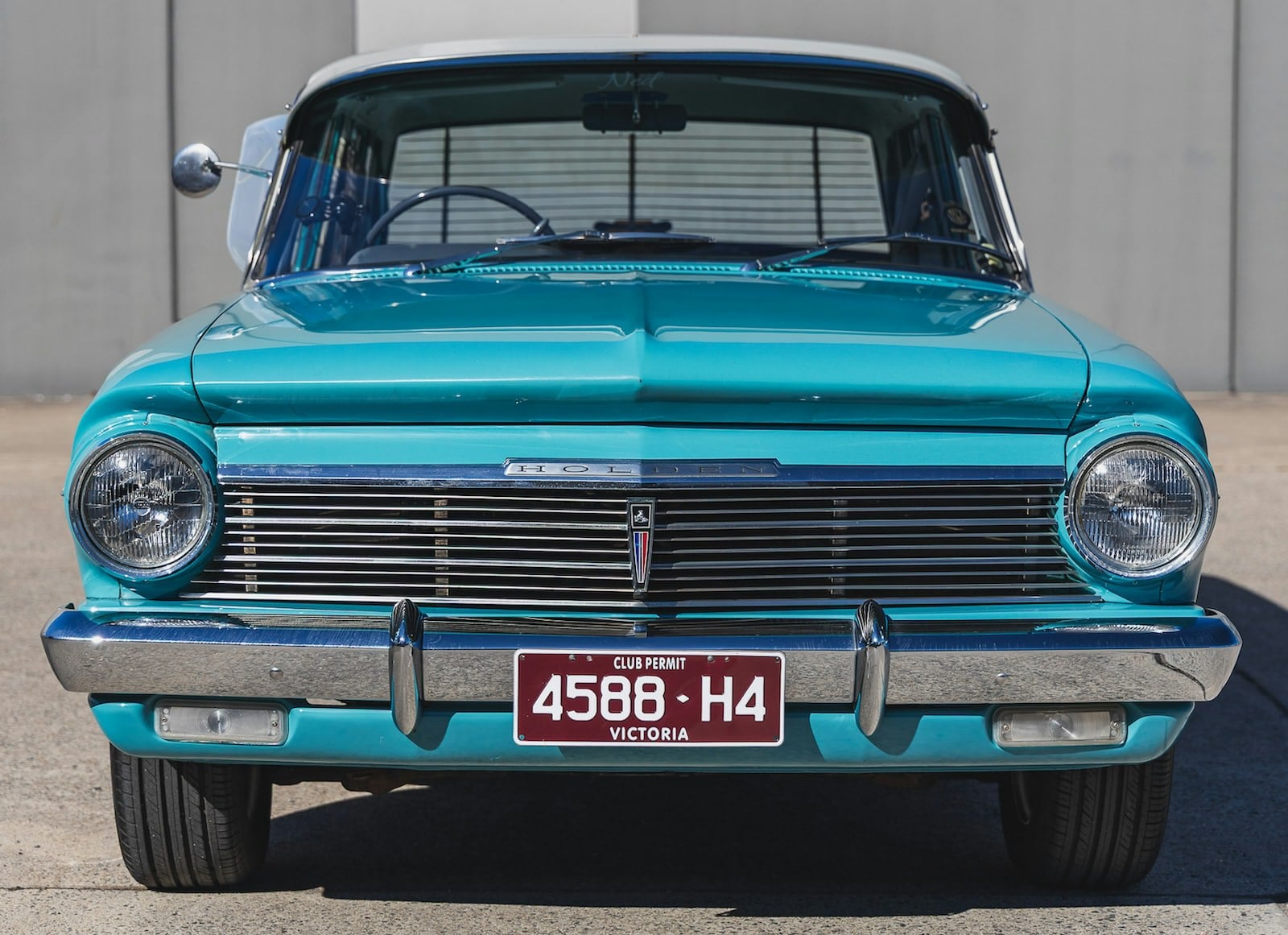
This is a 1963 Holden EH Special, it’s an Australian sedan that dominated the southern nation’s sales charts back in the 1960s, and remained a common sight on roads until well into the 1980s.
📌 The Core Development
This car is an EH Special, denoting the fact that it was a more upmarket version of the model, a special-equipment example with more chrome and better trim. This car had the largest engine on offer, the 179 cubic inch (2.9 liter) straight-six affectionately known as the Holden Red motor.
Holden released their new EH model in August of 1963, they would ultimately sell over a quarter of a million of them over three model years, 256,959 in total , and it soon became one of the most common family cars on Australian roads. The body of the EH was closely based on the earlier Holden EJ model, and Holden later described the EH as the fastest-selling Australian car ever.
🔍 Background & Sector Context
Holden released their new EH model in August of 1963, they would ultimately sell over a quarter of a million of them over three model years, 256,959 in total, and it soon became one of the most common family cars on Australian roads. Image courtesy of General Motors Holden.
The Holden EJ sedan of mid-1962 had been the first all-new Holden of the decade, it was lower and sleeker than the outgoing EK it replaced and introduced the Premier variant, Holden’s first ever luxury model, but it kept the old suspension and the 138 cubic inch (2.3 liter) “Grey” straight-six with a measly 75 bhp. Holden built 154,811 EJs in 13 months, it sold well, but it was clear that a new model was needed to stay competitive with their arch rivals over at Australia’s Ford operations.
📊 Industry & Real-World Impact
The new EH sedan changed far more of that body than Holden’s earlier facelifts had. The roof, rear quarters, trunk, front fenders, hood, grille and tail lights were all brand new, giving a squarer profile, though the ute and panel van kept the older EJ tail lights. The Standard EH sedan remained at the EJ’s price, but it offered a lot more car for the money.
Benchmark Telemetry & EV Fuel Savings
Put top supercars and EVs to the test in The Pit Stop Lab — launch head-to-head 1/4-mile drag strip battles & compute EPA electric fuel cost savings.
⚡ Prefer Visual Stories on Mobile?
Experience this news piece in an interactive 5-slide visual format crafted for mobile devices & Google Discover.
🔮 Strategic Outlook & What Lies Ahead
The new straight-six took its nickname from the bright red color of its block . It was a fresh design rather than a development of the earlier Grey six, a pushrod overhead-valve unit with seven main bearings and a single-barrel Bendix-Stromberg carburetor, built in two sizes on a common 3.00 inch stroke. The 149 cubic inch (2.4 liter) version made 100 bhp at 4,400 rpm and 145 lb ft of torque at 2,000 rpm, with a 95 bhp low-compression alternative.
Opening the bore from 3.25 to 3.563 inches gave the 179 cubic inch (2.9 liter) engine 115 bhp at 4,000 rpm and 175 lb ft of torque at 1,600 rpm, 53% more power than the Grey with a much stronger bottom end to boot.