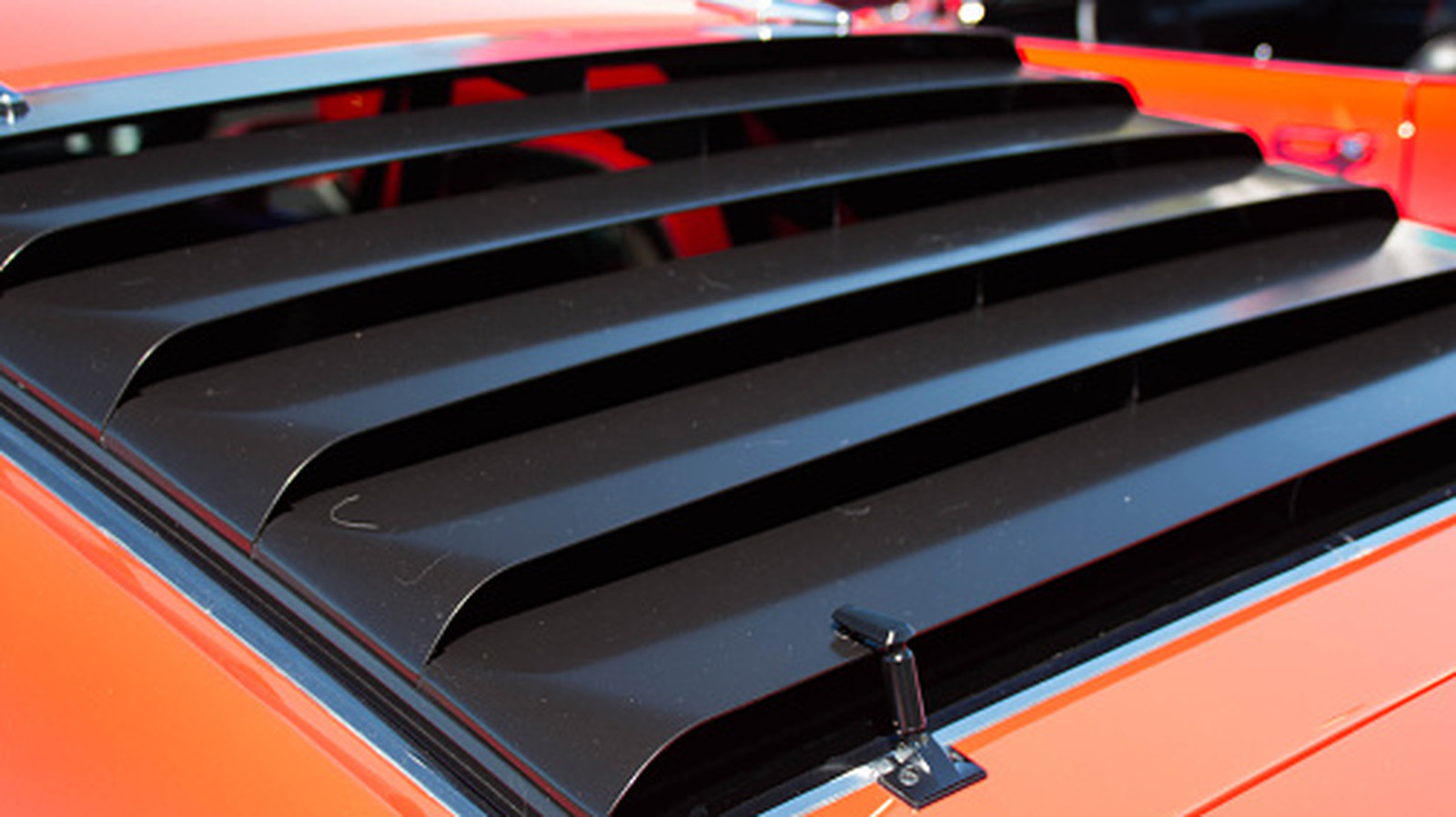
Window louvers used to be a big deal on muscle cars for a reason that was actually two reasons: the cool factor. They made the car aesthetically cooler on the outside, and they also made it literally cooler on the inside, blocking some of the sun from coming in from those sweeping rear windows during a time when air conditioning was less universal. Those little side quarter louvers over the rear windows count, too, by the way. On top of the visual factor, they were good at decreasing the amount of sun hitting the rear passengers in exchange for increasing blind spots.
📌 The Core Development
But we're not here to try and convince anyone of the practical benefits of window louvers. Every car we're talking about today has been out of production for decades, and you're not here for the finer points of louver functionality. You're here for classic coupes that look awesome and are really hard to see out the back of. From muscle car royalty like the Plymouth 'Cuda through poster cars like the Datsun 280Z and multiple generations of Mustangs, we've got the goods. Here are eight cars that best wore those sick horizontal slats.
The first generation of the Ford Mustang Mach 1 arrived for the 1969 model year with its long, sloping roof and muscular proportions that looked fast when standing still. This was the first time that the Mach 1 moniker had shown up on a production car –- previously it was used on a fastback concept that Ford had been showing off at car shows, but now it had landed as a new Mustang variant with a wildly aggressive aesthetic. That first Mach 1 leaned hard into the visual excess, with enough graphics, stripes, exposed hood pins, and scoops to make an AutoZone cashier blush, and you'd better believe that included rear louvers.
🔍 Background & Sector Context
Those louvers were called "Sport Slats," and they were a Ford factory option that promised to deliver a fast, sporty look to the back of the car and indeed did exactly that. Ford claimed at the time that the slats would keep sun glare and precipitation off of the rear glass, in fact improving rearward visibility, which feels like a stretch for something essentially styled off of half-closed venetian blinds. Regardless, they were a perfect finishing touch for a car that was already rocking more than its share of visual attitude and, while technically optional, they're an option you probably unconsciously select when you picture a first-gen Mach 1 in your head.
Far more than just an old-school pony car that isn't the Ford Mustang , the Plymouth Barracuda was one of the defining muscle cars of its era, specifically the now-iconic third-generation redesign that landed in 1970 and ran through 1974. The 'Cuda looked great, and there was plenty of performance underneath the styling, from the base 335-horsepower 383-cubic-inch V8 to the now-legendary 425-hp 426 big-block Hemi. It was a serious machine.
📊 Industry & Real-World Impact
However, it also featured some arguably unserious styling choices, with Chrysler offering what they called "High Impact" paint colors like an alarming green and bold orange, along with graphics and additional options like a shaker hood. And yes, window louvers were on the menu, too. For example, the factory-installed Backlight Louver Package for 1971 matched a black vinyl roof with rear-window trim and racing mirrors, with a strange catch for unlucky buyers in exactly one state: The package was prohibited on cars registered in Pennsylvania. Pennsylvania's regulations explicitly prohibit "louvered materials" that obstruct visibility by more than 50% (told you so, Ford). However, we'd like to think they thought it should be illegal to look so cool.
⚡ Prefer Visual Stories on Mobile?
Experience this news piece in an interactive 5-slide visual format crafted for mobile devices & Google Discover.
🔮 Strategic Outlook & What Lies Ahead
If you wanted a pony car in 1970, Detroit's Big Three offered no shortage of options, but America's kookiest car company, AMC , was also in the mix, offering buyers a distinctive alternative despite being an automaker better known at the time for uninspired commuters. The AMC Javelin represented a serious effort to earn a place within the segment. AMC had poached racing legends Mark Donohue and Roger Penske away from Chevrolet, and Donohue determined that for the Javelin to compete on the high-speed Trans-Am racing series tracks, it would need a lot more downforce.
We point this out not because of a commitment to aerodynamic engineering in early-'70s racing, but because their solution –- a fat ducktail spoiler later available on the production car –- helped the Javelin look awesome. And while the spoiler landed in consumer showrooms for homologation reasons, there was nothing regulatory or even particularly useful about another exterior element that could help make the Javelin look as mean as its name: killer rear-window louvers. AMC never offered these as an option, but owners who decided to add them found that they give the already distinctive coupe an even more aggressive look through the back end, for an appearance that makes it look ready to pick a fight with anything wearing a Mustang badge.