In 1989 one of the odder bits of automotive history happened in Japan. Known as the Japanese Gentlemen's Agreement , the JAMA (Japan Automobile Manufacturers Association) agreed that they would limit their vehicles to 280 horsepower. This was at a time when automotive deaths in Japan were very high, and the thought was this would prevent a horsepower war and, in turn, save lives. Nice thought.
📌 The Core Development
Did the automakers stick to this agreement? On paper, yes. Until about 2004, vehicles from Japan topped out at 280 hp. The Skyline GT-R? 280 hp. The Honda NSX? 280 hp. The Toyota Supra? You guessed it, "only" 280 hp. This handshake deal lasted until the early 2000's when the brave Honda/Acura Legend quietly broke the non-binding agreement and opened it up for the other manufacturers to quit pretending. Plus by this point, improved vehicle safety equipment had proven its value. Vehicles got safer, and fewer folks died as a result of car wrecks. Hooray!
That clears the way for us to have our very own horsepower war. Here are seven of the most powerful JDM internal combustion engines ever put into production, plus one honorable mention. It was tricky getting real numbers and impossible to know every JDM engine out there, so let us know what we missed. Also if an engine had a high horsepower brethren in the same engine family that could have made the list, we showcased the most powerful engine of the fam in order to make the list not just Toyota and Nissan.
🔍 Background & Sector Context
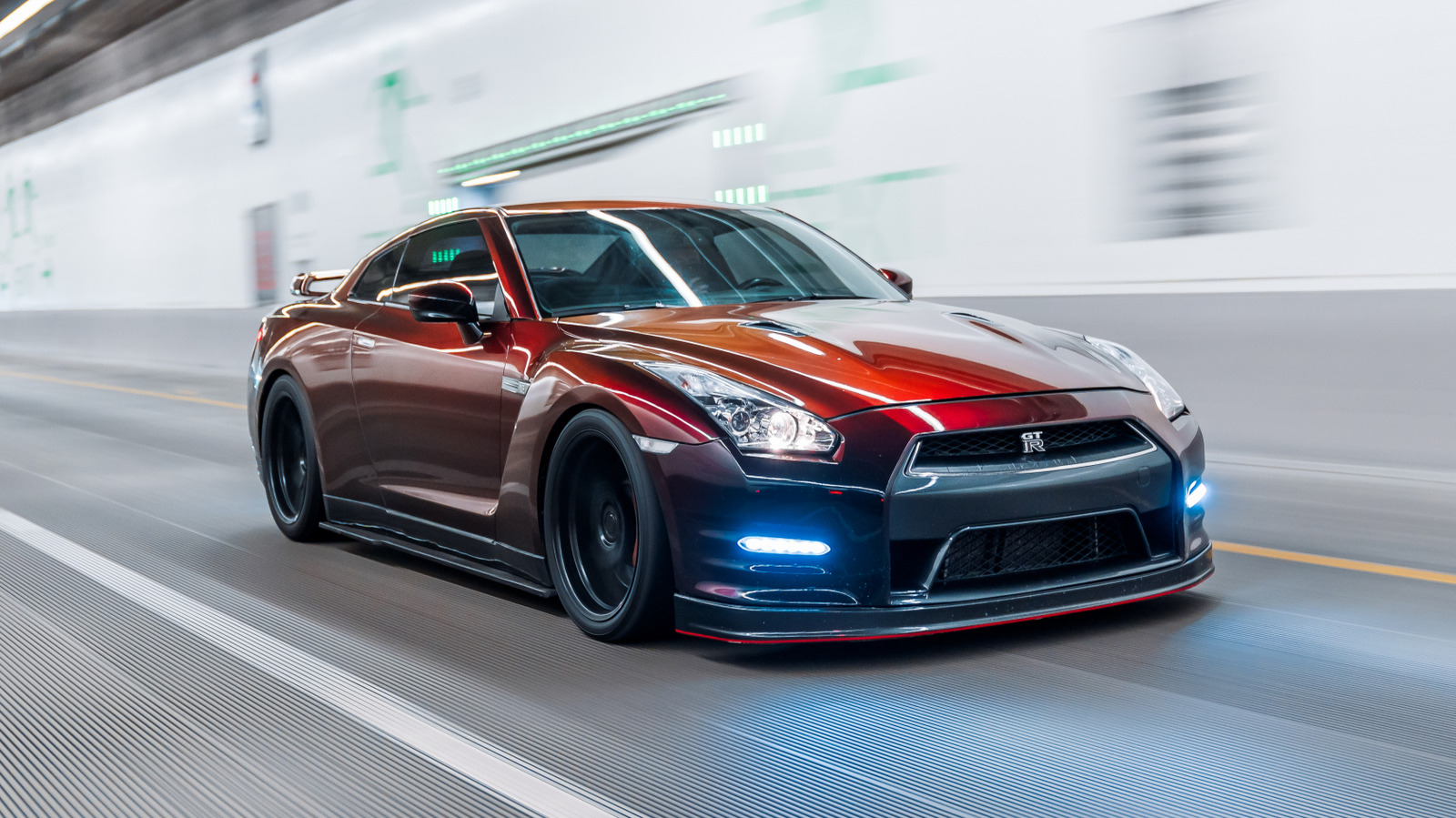
"With a purposeful grimace and a terrible sound" sang Blue Oyster Cult on their 1977 hit Godzilla. While this song really has nothing to do with Nissan or the GT-R, it does pop into the head of car enthusiasts of a certain age when they think about the word "Godzilla." We're speaking, obviously, of the Nissan GT-R and the VR38DETT that makes this monster growl. The VR38DETT is a twin-turbocharged Dual-Overhead Camshaft (DOHC) 3.9-liter V6 engine that powers the legendary Nissan R35 GT-R. Starting in 2007, a small team of "Takumi," or master builders, hand-built these engines.. In the "normal" GT-R they pushed out a respectable 565 hp and 467 pound-feet of torque. For the NISMO version, it cranked out 600 hp at 6,800 rpm and 481 lb-ft of torque. Go go, indeed.
While the GT-R is the only production vehicle the engine made it into, over the years it had a cameo in a couple wild concepts, notably the bonkers Juke-R , which went on sale for $600,000 . The engine lasted a solid 19 years before it and the GT-R were officially retired from production in 2024.
📊 Industry & Real-World Impact
Toyota chairman, Akio Toyoda had dreams of being a racecar driver. He was able to secretly pursue this under the moniker Morizo and race at the Nürburgring, but there was a problem: at that time, Toyota didn't make any cars that were competitive, so he got passed often. This frustrated Morizo and started him on the path to make cars that could compete. The peak of this goal was the Lexus LFA, which was built to be a supercar to rival the best in the world.
⚡ Prefer Visual Stories on Mobile?
Experience this news piece in an interactive 5-slide visual format crafted for mobile devices & Google Discover.
🔮 Strategic Outlook & What Lies Ahead
To be the best, the LFA needed an amazing engine, and in 2009 the 1LR-GUE was born. Developed in cooperation with Yamaha, this powerhouse is a 552-560 hp liquid-cooled 4-stroke DOHC 4.8-liter V10 that sits at a 72-degree V-angle. Built to be incredibly high revving, it goes from idle to its 9000 rpm redline in just 0.6 seconds—so fast that an analog tachometer couldn't keep up, so they had to go digital. This shot the LFA from 0-60 mph in a scant 3.6 seconds, maxing out at a 202 mph top speed.These specs demonstrate how quick the car is, but it doesn't capture how fantastic it sounds doing it. Some call it "the roar of an angel," MotorTrend calls it "by far one of the most beautiful-sounding cars ever built." Yamaha specifically engineered the engine to achieve that rich, screaming, F1-like sound. The LFA had a short 2-year production run, with just 500 units built before it was discontinued in 2012.
While the LFA was winning over the hearts, minds, and ears of enthusiasts everywhere, it was only the beginning of the story. The Lexus F line of high-performance vehicles spread out the awesome sauce across the product line. The heart of the F line is the 2UR-GSE, a naturally aspirated DOHC 5-liter V8. Output varied across its lifespan and application, but at its peak it put out 472 hp and 395 lb-ft of torque.