Naturally aspirated combustion engines. Aren't they just exquisite? Nothing sends a tingle down your spine like a V12 at full tilt, and one could argue that the only thing that works harder than a free-breathing V8 is Dwight Schrute. V6s, meanwhile, are just about as versatile as inventions come, powering everything from the glorious Alfa Romeo 155 DTM to the humble Honda Odyssey.
📌 The Core Development
Then there's the four-cylinder engine. It is by far the most successful of the bunch, and though it isn't quite as exotic or exciting as its peers, it can pack an almighty punch under the right hood. That is precisely what we want to celebrate in this article: the rowdiest, most powerful little naturally aspirated four-bangers ever created. We've got road cars, race cars, and even a reborn 1970s legend making appearances, and some of these would be more than capable of scaring a V6 or two (which would make, er, a V12). Saddle up — the first one's a corker.
Take 1,224 pounds, spread almost perfectly between the axles, and add a 343-hp, 2.5-liter naturally aspirated four-cylinder. Sounds like quite the recipe, doesn't it? The Mono R delivers precisely the sort of statistical hit squad you'd imagine: 0 to 62 mph in 2.5 seconds and a top speed of 170 mph. Oh, and that engine also spins to a wicked 8,800 rpm – and since the only gearbox option is a six-speed sequential, you can really max those revs out before upshifting.
🔍 Background & Sector Context
More numbers, did you say? Sure. The Mono R develops 137 hp per liter, which trumps even the Porsche 918 Spyder hypercar. It also delivers a power-to-weight ratio of 618 hp per metric ton, superior even to the unhinged Lamborghini Sesto Elemento. All this helped BAC set a new production-car lap record at the Red Bull Ring in Austria, beating the previous leader, the Ferrari LaFerrari, by almost 6 seconds.
Widely considered to be one of the finest two-seat driver's cars ever made, the Honda S2000 is nothing short of a mechanical masterpiece. Its engine is a screamer: two liters, four cylinders, and a bit of VTEC wizardry sprinkled on top, culminating in a 9,000-rpm redline. The F22C1 engine in the S2000 may have been unique to the U.S. , but it wasn't the cream of the crop.
📊 Industry & Real-World Impact
That accolade goes to the original F20C, which produced 247 hp (as opposed to 237 hp). Small margins, sure, but the F20C's specific output of 123 hp per liter remained a record for naturally aspirated production engines for about a decade. It was eventually dethroned by the stunning Ferrari 458 Italia, and in truth, there's nothing to be upset about there. Here's a fun fact for you: at its redline, the S2000's engine had a mean piston speed of 4,960 feet per minute (25.2 meters per second), which was even more than what in-period Formula 1 engines could manage.
Benchmark Telemetry & EV Fuel Savings
Put top supercars and EVs to the test in The Pit Stop Lab — launch head-to-head 1/4-mile drag strip battles & compute EPA electric fuel cost savings.
⚡ Prefer Visual Stories on Mobile?
Experience this news piece in an interactive 5-slide visual format crafted for mobile devices & Google Discover.
🔮 Strategic Outlook & What Lies Ahead
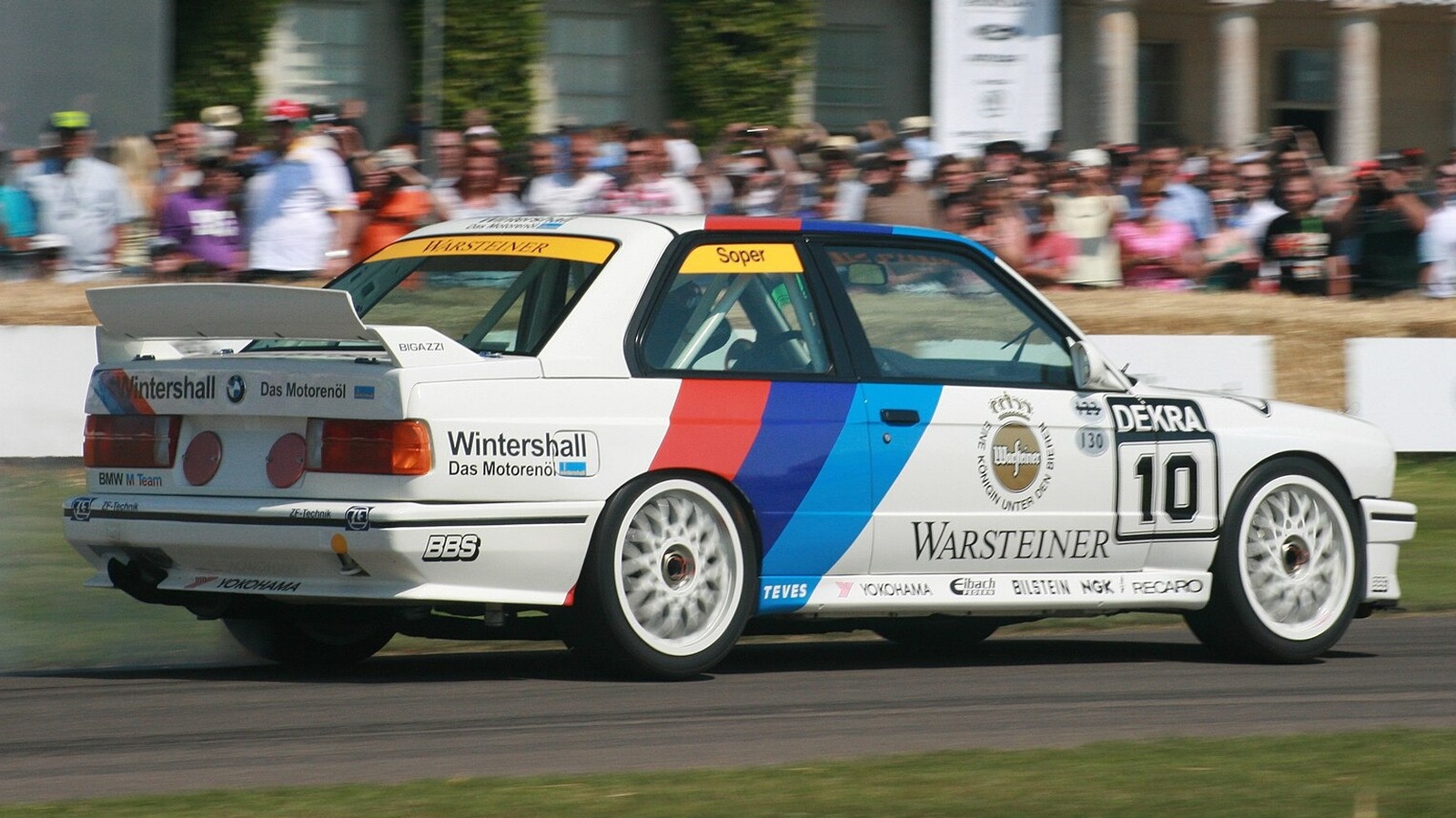
These days, the E30 M3 is riding high as a cult icon whose design speaks to almost everybody it passes, but back in the late 1980s and early 1990s, it had absolutely no problem getting those perfectly symmetrical kidney grilles dirty.
In its first two seasons in touring car racing, the E30 M3 won titles in England, France, and Germany, and even became a world champion. In fact, during its five-year racing career in Group A, the E30 M3 is estimated to have won more than 1,400 races worldwide. That averages out to one race win every 31 hours.