
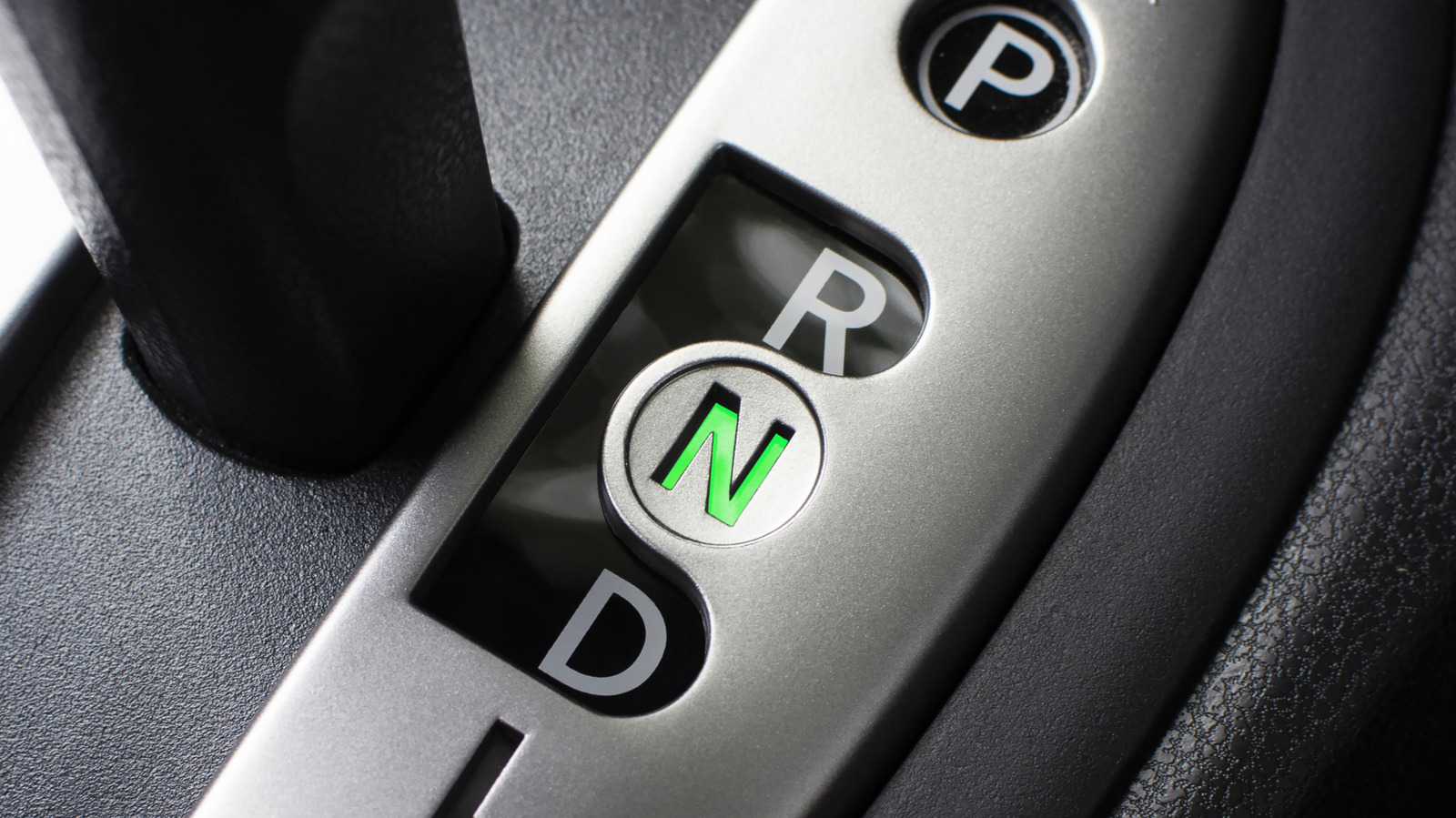
Automatic transmissions may not be the enthusiast choice , but they are good at removing some of the stress and confusion from driving. There's no tricky clutch to balance, and no mystery over which gear you should select for that upcoming curve. Sure, some have manual modes with paddles and a Sport setting. But their use is optional. Most drivers likely just drop the shifter into drive, and away they go.
📌 The Core Development
There is though, one feature on automatic transmissions that might cause confusion, even now, more than 70 years after clutch pedals began to disappear from American cars. Why do automatic shifters have a neutral position, and when would you ever need to use it? Conventional automatics are built from sets of planetary gears, and use a fluid coupling called a torque converter to multiply engine torque and transfer it to the wheels.
🔍 Background & Sector Context
Dual-clutch automatics are more like traditional manual transmissions, but with two electronically-controlled clutches, one for odd gears, and another for evens. A continuously variable transmission (CVT) — which is not as bad as everyone thinks — relies on a belt running between two cone-shaped pulleys to create an almost infinite number of gear ratios. You can't stall any of them in normal driving when the powertrain is working correctly, but shifting to neutral has the same effect it would in a manual car. It fully disconnects the engine torque from the driven wheels.
📊 Industry & Real-World Impact
That ability to separate the engine from the wheels can be useful if you need to move an automatic car around a workshop when the engine won't fire up. Or if you need to tow it out of a ditch. But you should never tow a traditional automatic car too far with the engine off and the drive wheels on the ground. The transmission relies on a flow of fluid to protect its components from wear, and if the engine isn't running, the transmission pump isn't either.
Benchmark Telemetry & EV Fuel Savings
Put top supercars and EVs to the test in The Pit Stop Lab — launch head-to-head 1/4-mile drag strip battles & compute EPA electric fuel cost savings.
⚡ Prefer Visual Stories on Mobile?
Experience this news piece in an interactive 5-slide visual format crafted for mobile devices & Google Discover.
🔮 Strategic Outlook & What Lies Ahead
You might also find yourself grateful for that neutral position if your throttle jams wide open , a thankfully rare occurrence. Shifting to N means you could regain some control because the brakes aren't battling against the powertrain's determination to rendezvous with the horizon. Switching the engine off is an option too, but then you could lose the brake booster and steering assistance, which sounds even worse.
What about shifting to neutral when idling? Engineers say there's no point. It saves almost no fuel and the additional shifts between drive and neutral can add unnecessary wear. Same applies when you're going downhill. You'll save little gas, and have less control over the car. Another Neutral no-no is when parking. Experts say you should always use park, instead of slotting neutral and relying on the parking brake. Park engages a pawl that locks the transmission's output shaft, and provides an extra layer of protection against rollaway accidents. All of which means neutral is somewhere most of us will only spend time on our way from drive to reverse and back again.


