The movie Ghostbusters was a flat-out smash when it debuted in 1984, becoming the highest-grossing comedy at the time — until it was replaced by Home Alone in 1990. No doubt helping matters were all the stars attached to the flick, including Bill Murray, Dan Aykroyd, Sigourney Weaver, Rick Moranis, Harold Ramis, Ernie Hudson, and, of course, the Ecto-1.
📌 The Core Development
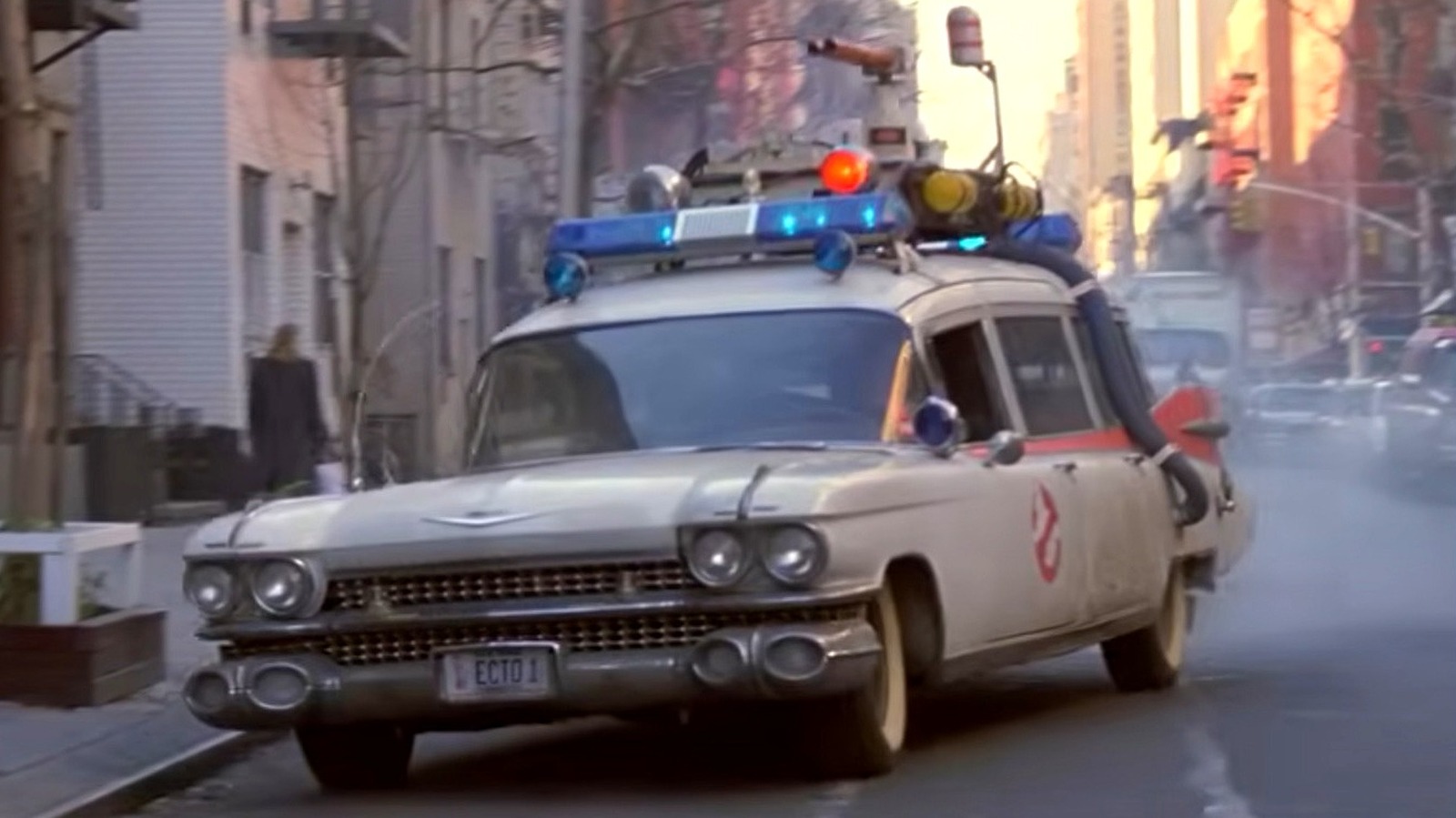
That last name refers to the Ghostbusters' original support vehicle — a modified 1959 Cadillac wagon that offered enough room for the team's Proton Packs, Ecto Goggles, P.K.E. Meters, and Ghost Traps. Needless to say, the car cast a huge shadow since the film was first released — as you'd expect from a vehicle that's almost 21 feet long – and it still inspires ghost-battling gearheads around the world today. Even Rivian recently got into the action with an R1S featuring officially licensed movie sounds, games, and a spooky voice assistant , as well as an Ecto-style livery.
Speaking of which, did you know the original plans for the car would have given it a far different look? Aykroyd, who had worked on early drafts of the script with Ramis, had wanted to use a black car lit up by purple and white strobe lights. But because so much shooting was to be done in the dark of night, when a black vehicle would be tough to film, white was chosen instead. Nor is that the only little-known factoid about the legendary Ecto-1. In fact, we've got five more for you right here.
🔍 Background & Sector Context
It's not uncommon for filmmakers to use multiple vehicles behind the scenes to play a single car on-screen. For example, for the classic gearhead flick "Gone in 60 Seconds," it turns out that 11 different cars were used to play Eleanor in the film — don't worry, though, as no actual Shelby GT500s were harmed during shooting .
Now, two different Cadillac-based Miller-Meteor vehicles did appear in the original "Ghostbusters." But the first, a rental wearing a coat of black primer, basically played the donor car for what would become the Ecto-1. In the movie, the black car is upgraded into proper ghost-busting condition to become the Ecto-1. In the real world, however, it went back to the rental agency, and the second car took on the role. That said, after the initial Ecto-1 broke down during filming of "Ghostbusters II," earning the production crew a fine, the crew brought in a third car and modified it to fill in for the rest of the movie. As for the Ecto-1, it was reportedly ignominiously dumped on a studio lot, where it languished, exposed to the elements for almost 18 years. It was eventually restored by Cinema Vehicles and used to promote its 2009 Ghostbusters video game.
📊 Industry & Real-World Impact
It was actually both! While the media often describes the car underpinning the Ecto-1 as a Cadillac ambulance, that's not the whole story. The car is a Cadillac Miller-Meteor Futura Duplex, one of an estimated 400 built for 1959, and the Duplex name refers to its two potential functions — the same car can fairly quickly switch from ambulance to hearse or vice versa. Its secret seems to have been a rear compartment with ambulance-attendant seats that could fold into the floor, which in turn can be flipped over to hide or expose casket rollers as needed.
⚡ Prefer Visual Stories on Mobile?
Experience this news piece in an interactive 5-slide visual format crafted for mobile devices & Google Discover.
🔮 Strategic Outlook & What Lies Ahead
The Miller-Meteor part of the equation is explained by the company behind the conversion. The coachbuilder was formed when a bus company called the Wayne Works (later Wayne Corporation) purchased Miller and then, separately Meteor — two rivals in the livery car market. Merging the two helped create what was, for a time, the world's largest manufacturer of hearses and ambulances.
To be clear, though, while Miller-Meteor handled much of the bodywork, its foundation was a heavy-duty commercial chassis from Cadillac that was in production from 1931 to 1979. This was part of Cadillac's long history of building funeral cars , and it meant that only the front bodywork was from the factory — well, that and its rear tailfins. They were borrowed from the 1959 Cadillac Eldorado and are still the biggest ones to ever appear on a production vehicle.