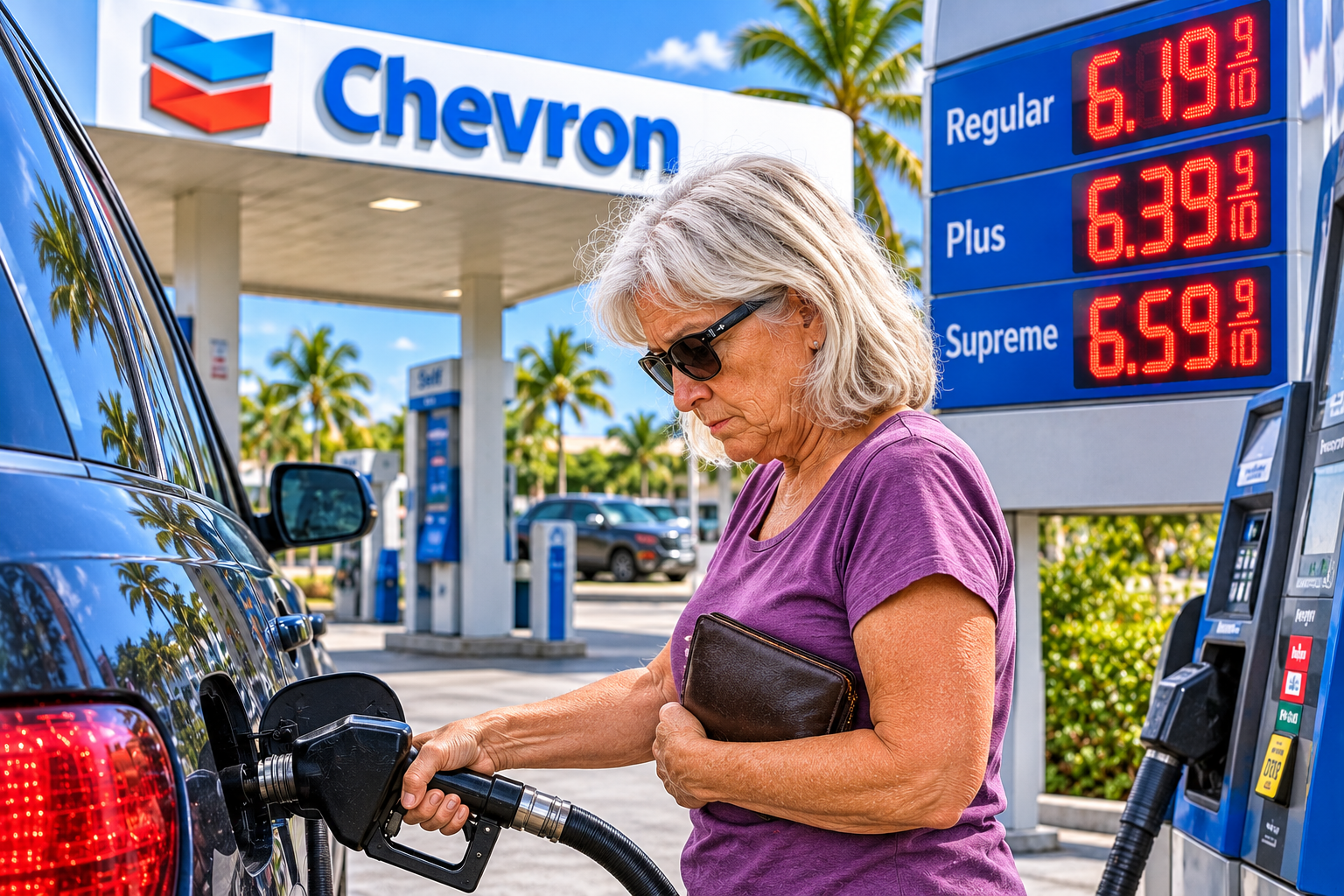
Since the beginning of America’s war against Iran, Americans have paid an additional $150+ billion for gas and diesel than they did last year during the same time period , according to a study from Brown University. Global gas prices have risen because supply has been disrupted (Iran having one of the top oil reserves in the world). Americans are paying upwards of $6 a gallon even though American oil companies have not had their own supply chains disrupted the way crude from the Middle East has.
📌 The Core Development
The result? Windfall profits for big oil at the expense of American citizens.
In the leadup to his election in 2024, Donald Trump asked about 20 oil executives at Mar-a-Lago to raise $1 billion for his campaign, promising to reverse dozens of Biden-era regulations if elected. The industry seems not to have raised the full $1 billion, but oil interests still gave tens of millions to Trump-aligned committees. The policies put in place by the Republican party, who has had control of congress and the White House since the last election, have been very pro oil & gas, whether they were anti-EV, anti-solar, anti-energy efficiency, anti-fuel efficiency, anti-wind, or just flat out subsidies to oil and gas.
🔍 Background & Sector Context
They ended many of the Biden Administration’s clean energy policies. They ended the Solar For All Program ( or tried to ). They ended residential and commercial solar tax credits. They signed Executive Order 14315 to terminate wind and solar production and investment tax credits and impose additional restrictions. They made solar development on Federal lands more difficult . On his first day in office, Trump signed a memo withdrawing federal offshore areas from new and renewed wind leasing – but the rule didn’t apply to oil and gas. They ended wind tax credits . They kneecapped the federal standards for vehicle fuel efficiency . They tried to eliminate Energy Star , a program that costs the government $32 million a year and saves Americans $14 billion a year. They weakened Home Energy Rebate programs , SPECIFICALLY stipulating that they could not be used to replace polluting gas furnaces (that increase childhood asthma by more than 15%) with energy efficient electric options. They even tried to make it illegal for future legislators to improve energy efficiency legislation. Then, as if that wasn’t enough, they just gave our tax dollars to the fossil industries , allocating about $190 billion in tax breaks and subsidies over the next decade from the OBBBA.
If this isn’t quid pro quo, I guess I don’t understand what quid pro quo is. But the Iran War took it to a whole new level.
📊 Industry & Real-World Impact
Since it began on February 28, as Americans have spent about $150 billion more on gasoline and diesel, U.S. oil and gas companies earned more than $130 billion in profit from April through September, nearly triple what they earned a year earlier, according to the New York Times .
Benchmark Telemetry & EV Fuel Savings
Put top supercars and EVs to the test in The Pit Stop Lab — launch head-to-head 1/4-mile drag strip battles & compute EPA electric fuel cost savings.
⚡ Prefer Visual Stories on Mobile?
Experience this news piece in an interactive 5-slide visual format crafted for mobile devices & Google Discover.
🔮 Strategic Outlook & What Lies Ahead
We can’t say the war was fought for the industry. The president has said his focus is stopping Iran from getting a nuclear weapon. But we can say who is paying at the pump and who is collecting.
Connect the dots however you like, but connect them before you vote. Add it to the roughly $50 billion that US taxpayers have directly spent on the war , and untold more that has percolated through the rest of our economy due to inflationary pressure from rising energy costs, and it’s safe to say it’s well over $200 billion that this war has cost us, alongside the unquantifiable cost in human lives and suffering.