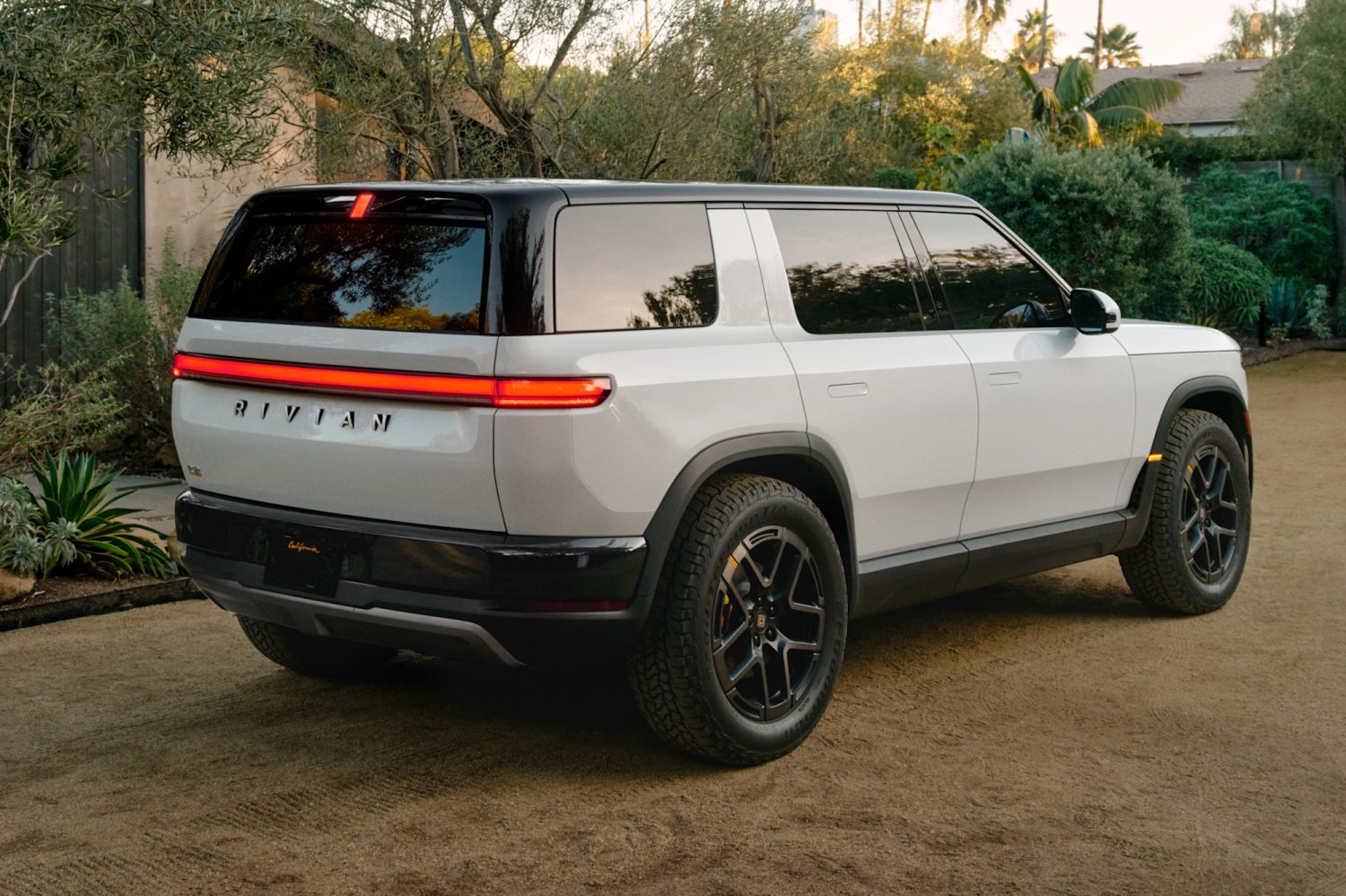
Rivian (RIVN) just released its Q3 2026 earnings, with revenue up 38% year-over-year to $2.155 billion. The R2, in its first full quarter of deliveries, is already the company’s best-selling vehicle, ahead of both the R1 and the Amazon van.
📌 The Core Development
The results beat Wall Street’s expectations, and Rivian is raising its 2026 guidance on every metric. But the car business is still losing money, and the R2 ramp made the automotive margin worse this quarter.
We already had the volume side. Rivian reported earlier this month that it built 19,751 vehicles and delivered 19,248 in the quarter, both records. Deliveries were up 46% from a year ago and 58% from Q2.
🔍 Background & Sector Context
Analysts were looking for about $2.02 billion in revenue, an adjusted loss of $0.61 per share, and an adjusted EBITDA loss of roughly $576 million, according to Bloomberg consensus. Rivian beat all three.
The demand signals for the R2 are good. Rivian says reservation conversion for the launch edition trim stayed above its expectations, it added a second R2 production shift in Normal, Illinois, and demo drives jumped to over 103,000 in the quarter, up from 57,000 in Q2.
📊 Industry & Real-World Impact
The problem is the automotive gross margin. Rivian’s automotive segment posted an $80 million gross loss in Q3, a -5% margin. That’s better than the $130 million loss a year ago, but worse than the $36 million loss (-3%) we saw in Q2 .
Benchmark Telemetry & EV Fuel Savings
Put top supercars and EVs to the test in The Pit Stop Lab — launch head-to-head 1/4-mile drag strip battles & compute EPA electric fuel cost savings.
⚡ Prefer Visual Stories on Mobile?
Experience this news piece in an interactive 5-slide visual format crafted for mobile devices & Google Discover.
🔮 Strategic Outlook & What Lies Ahead
Rivian blames about $120 million of extra cost of revenue on the R2 ramp, compared to production at “more normalized levels.” And the quarter got help that won’t repeat on demand: $81 million in regulatory credit revenue and an IEEPA tariff refund receivable.
Strip out the credits and the automotive segment lost about $161 million at the gross level, or roughly $8,400 per vehicle delivered. Not great.