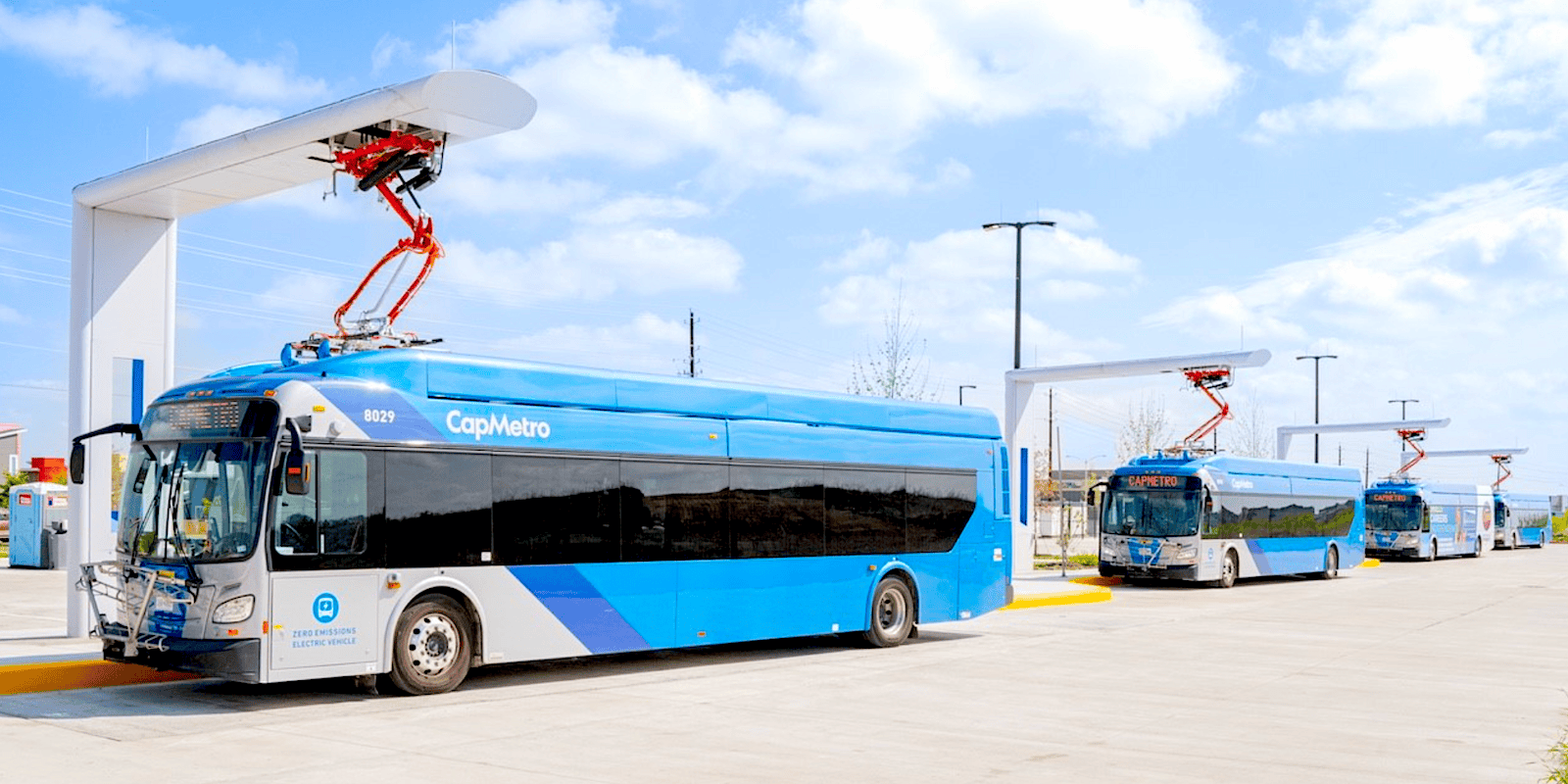
CapMetro’s Austin transit fleets electrified two public bus lines and opened two new park-and-ride facilities featuring overhead pantograph-style wired charging equipment to help Austinites breathe a little bit easier.
📌 The Core Development
Originally announced in June, CapMetro’s two new park-and-ride stations are now open. Dubbed the Goodnight Ranch and Expo Center facilities debuted alongside the agency’s Rapid 800 and 837 electric bus routes, adding upgraded passenger amenities and end-of-line charging infrastructure to support its growing fleet of electric transit buses.
At CapMetro’s main bus depot, infrastructure partner Camber Charging supplied and installed two 1,440 kW charging systems connected to 48 industrial dispensers . The installation provides 2.9 MW of total charging capacity, and is designed to support overnight charging for up to 48 electric buses simultaneously .
🔍 Background & Sector Context
The new Goodnight Ranch and Expo Center terminals extend that infrastructure along the Rapid 800 and 837 routes with the overhead pantograph chargers that are the big news here, allowing buses to top off their batteries at the end of each line and eliminate any lingering range anxiety for the trip back.
“Instead of a typical bus holding 8 hours of charging, on-route charging takes that out to 20 to 22 hours,” explains CapMetro Chief Operations Officer and Executive VP, Andy Skabowski. “Every time that pantograph drops, we charge that bus. That’s what makes a commitment like (every) 10- to 15-minute service possible.”
📊 Industry & Real-World Impact
The buses themselves are built on Canadian manufacturer New Flyer’s Xcelsior battery-electric transit platform (battery specs aren’t included in the release, but New Flyer claims up to 660 kWh of available capacity). And, with up to 320 all-electric hp with all its torque available at 0 rpm, the city’s 48 electric buses will have no problem navigating Austin’s stop-and-go traffic .
⚡ Prefer Visual Stories on Mobile?
Experience this news piece in an interactive 5-slide visual format crafted for mobile devices & Google Discover.
🔮 Strategic Outlook & What Lies Ahead
This seems like a logical cost effective solution. In theory, this should enable transit systems to purchase busses with smaller batteries which would surely offset the cost of the new charging infrastructure.
Camber Charging provides preventive maintenance, charger and energy management software and remote diagnostics across all three locations.