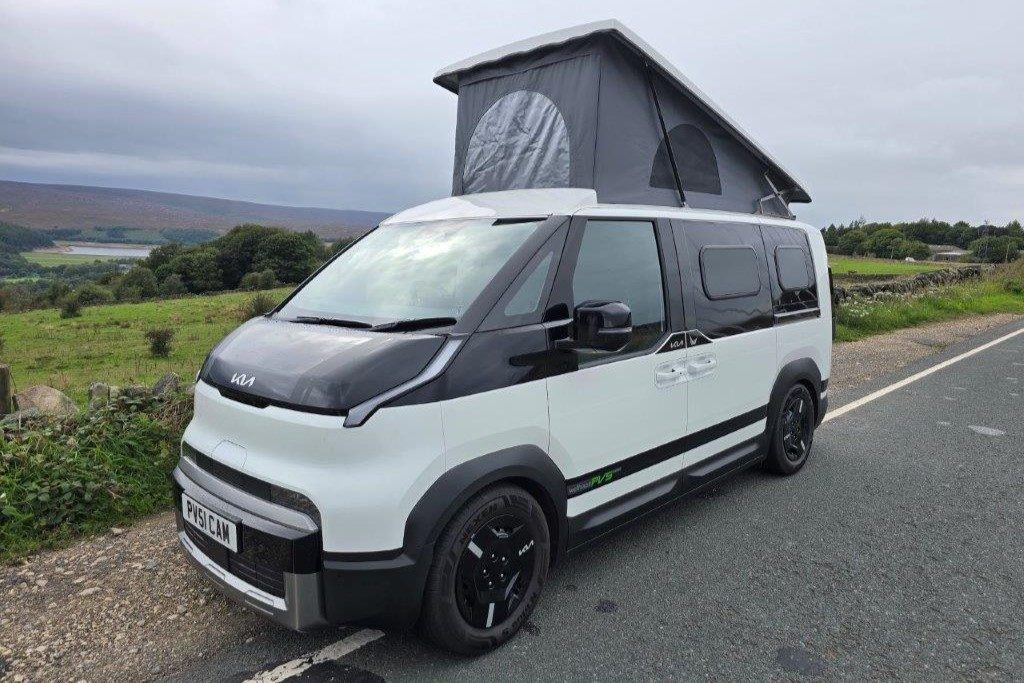
Kia’s electric campervan, based on the PV5 , includes two double beds, a 200 W solar panel, and a fully equipped kitchen.
📌 The Core Development
The PV5, Kia’s first 100% electric van, has been a huge success for the Korean automaker. After launching it at the end of last year, the PV5 has already become Europe’s top-selling small (C-segment) electric van.
Based on its modular skateboard platform, called E-GMP.S, Kia can easily swap body styles to build custom configurations.
🔍 Background & Sector Context
Although the PV5 is primarily sold in Passenger for everyday driving and Cargo for business use, Kia said the platform unlocks “endless possibilities” for different body styles and conversions, including a full-on electric campervan.
Wellhouse Leisure, a family-run campervan manufacturer based in the UK, revealed the Kia PV5 i-Camper.
📊 Industry & Real-World Impact
The fully electric campervan is “now built and ready to view,” the company said. Based on the PV5 Cargo Plus, the campervan measures 4.69 m long, 1.89 m wide, and 1.99 m tall, which is about the size of a Ford Custom.
⚡ Prefer Visual Stories on Mobile?
Experience this news piece in an interactive 5-slide visual format crafted for mobile devices & Google Discover.
🔮 Strategic Outlook & What Lies Ahead
Although that’s pretty small for a camper, it offers more than you’d expect. Inside, the PV5 i-Camper includes two double beds with an elevating roof, a full kitchen setup, and a 200 W solar panel.
The sliding seat system enables the two rear seats to fold flat to form a bed and can be removed entirely. The upper bed, under the pop-up roof, has “more comfy” Froli Springs.