The Mexico City track is one of the outliers of the Formula 1 season, mainly because of the altitude: it is 2240 meters above sea level, which equates to roughly 25% less dense air, so it makes everything just that bit more difficult.
📌 The Core Development
For the drivers it's basically harder work, but for the cars it's a very different story, because at that altitude the cars will produce less downforce and with that less drag. In the past, teams would use more or less Monaco-specification wings but this season with the change in wing regulations and active aero they don't have that possibility.
So, basically the ars will slide around more but the reduced drag means that top speeds are even faster than normal. This means that you will arrive at the end of those long straights faster and require a longer braking duration, which generates more heat in the brakes.
🔍 Background & Sector Context
These cars are turbocharged so in reality even though the turbo has to work harder and will be running at or as near to its maximum rpm as possible for most of the lap, it will still produce similar levels of power output. This means the engine's heat rejection isn't reduced, so you need to cool the cars roughly 25% more than you normally have to.
Also, as it's an electrical energy-rich circuit layout you will also generate more heat into the battery pack and its control systems simply from harvesting and deployment.
📊 Industry & Real-World Impact
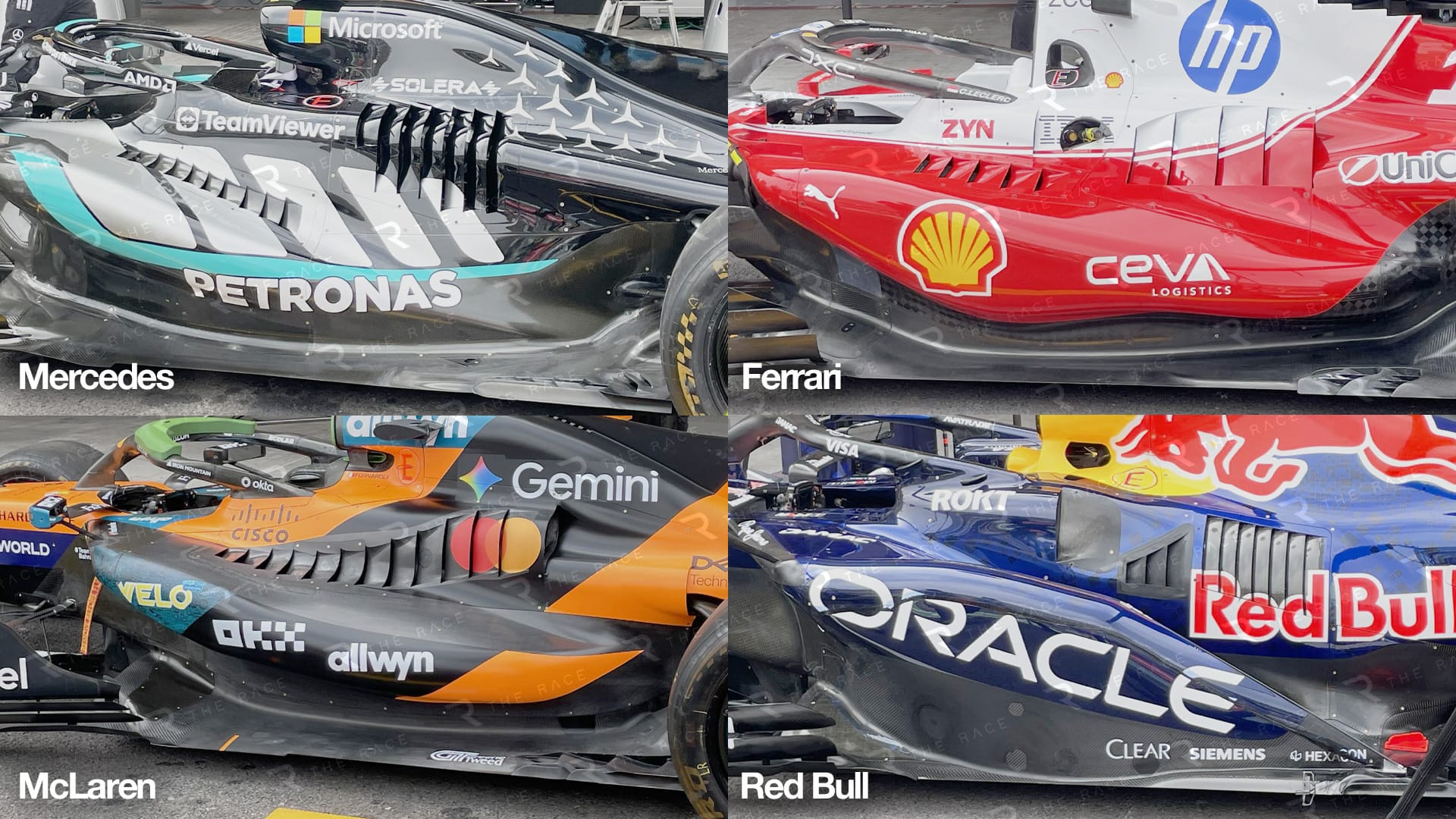
Basically, everything needs higher levels of cooling and below I have had a look at the top-four teams' changes from what they normally run. It's not easy to alter the inlet area on these cars as it is part of the side impact structure, so changing it would basically require redoing the side impact tests, so instead everyone will focus on the cooling exits, size, location and quantity.
Benchmark Telemetry & EV Fuel Savings
Put top supercars and EVs to the test in The Pit Stop Lab — launch head-to-head 1/4-mile drag strip battles & compute EPA electric fuel cost savings.
⚡ Prefer Visual Stories on Mobile?
Experience this news piece in an interactive 5-slide visual format crafted for mobile devices & Google Discover.
🔮 Strategic Outlook & What Lies Ahead
First of all we can have a look at the rear exits.
The red ellipse highlights the rearwards-facing outlet. McLaren has raised the section above the exhaust outlet to increase the exit area.