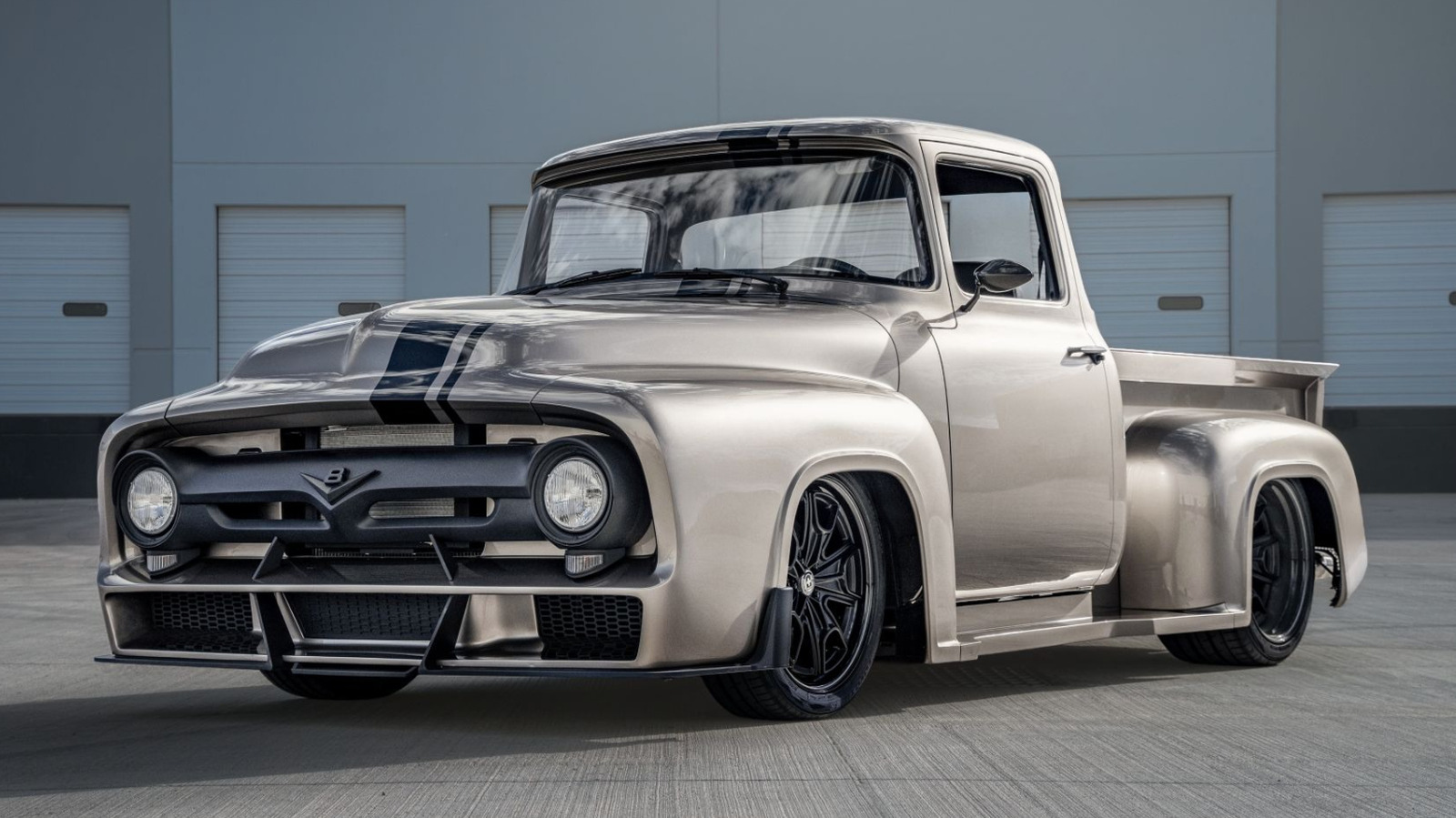
Pickup trucks have changed a lot since the Ford F-100 in 1953, and now come with more space, more practicality, loads of new technology, and much more power. In developing and building a wild 1956 F-100 for this week's SEMA Show, Fat Fender Garage could have taken the project in several different directions. It could have stuck true to the original F-100 and restored it, or perhaps restored one and subtly modified it. Instead, the Arizonan firm has built an F-100 aimed at matching the performance of a modern Ford GT. Put simply, it's extreme.
📌 The Core Development
The wild F-100 , known as the GT/FX, is built around an all-new chassis and uses a 5.0-liter Coyote V8. This is no ordinary Coyote , as it's topped with a 3.0-liter Whipple supercharger, delivering a combined 800 horsepower and 750 pound-feet of torque. The engine also features a bespoke Borla exhaust system and pairs with a 10-speed automatic transmission that drives the rear wheels.
Fat Fender Garage says designing and building this F-100 took more than 15,000 hours, and much of that time went into the chassis and suspension. The pickup rides on FF1 performance coilovers that apparently help it "deliver handling akin to a modern supercar." We're doubtful of that claim, although it should certainly handle better than an original F-100 and most modern pickups. Complementing all the added horsepower and torque are large Wilwood brakes with six-piston calipers at the front and four-piston calipers at the rear.
🔍 Background & Sector Context
Every piece of the F-100's exterior is new. It features hand-crafted steel body panels, including flared front and rear wheel arches, and a bespoke grille with modernized headlights and air intakes. The coilovers have dropped the Ford's ride height significantly, though Fat Fender Garage has found enough room to fit custom HRE wheels with wide Toyo Proxes Sport 2 tires.
The F-100 also rocks the same rear diffuser as a Ford Mustang GT350 and includes a bespoke chin splitter, running boards, and custom stainless bumpers. The paint is also unique, combining a beautiful shade of silver with black running stripes running over the length of the truck. It looks so good that if we were the proud owner, we might have a little trepidation about driving this beast out on the open road.
📊 Industry & Real-World Impact
There's also no mistaking this F-100's interior from any regular one. It has new leather details, bucket seats, and a modern climate control system hidden within the dashboard. Fat Fender Garage has also equipped it with new gauges, door actuators, and a proper audio system. There's no word on how powerful the audio system is, but it'll have to be strong if it wants to overpower the Coyote V8.
Benchmark Telemetry & EV Fuel Savings
Put top supercars and EVs to the test in The Pit Stop Lab — launch head-to-head 1/4-mile drag strip battles & compute EPA electric fuel cost savings.
⚡ Prefer Visual Stories on Mobile?
Experience this news piece in an interactive 5-slide visual format crafted for mobile devices & Google Discover.
🔮 Strategic Outlook & What Lies Ahead
"GT/FX illustrates just how far we can take a classic truck," Fat Fender Garage founder Jason Noel said. "We wanted to bring the attitude of a Ford GT to a '56 F-100 and carry that idea through every aspect of the build. This truck represents the culmination of everything our team has learned and built over the years. From the chassis and interior to the performance systems, fabrication, paint, and final assembly, GT/FX brings the entire Fat Fender Garage ecosystem together in one vehicle."