The Electric Vehicle Council has been tracking the progress of electric vehicle uptake in Australia over the last ten years. Their latest report is a celebration of achievements. It is 144 pages long, and you can read the entire report here . I will just be hitting the highlights and providing some comments along the way.
📌 The Core Development
In a demonstration of how fast the EV transition is moving in Australia, the EVC report projections to the end of the year are already hopelessly out of date, with a surge over the last three months looking set to continue through to the end of the year. Nevertheless, the report makes encouraging reading.
Both BEV and PHEV sales have doubled comparing H1 2025 with H2 2026. A new EV is sold in Australia every 100 seconds as Australians seek to cut costs and gain energy security. The ratio of BEV to PHEV sits at 2:1, similar to many other countries. The report warns of a possible “fragility” in Australia’s EV sales due to increasing demand for public charging and the possible introduction of a road user charge.
🔍 Background & Sector Context
The report says that so far installation of public charging has kept up with demand. This is due to the fact that most Australians charge at home. There are 4268 AC and DC public charging locations available, an increase of 18% year on year and 11,600 public AC and DC connectors, a 31% increase year on year.
Political threats might also derail the electric train of progress. Australia’s right wing political parties are threatening to remove the New Vehicle Efficiency Standards and the Fringe Benefit Tax exemption should they gain power. The battle is not yet won. Intense lobbying by vested interests in the auto industry (FCAI) has led to significant misrepresentation in the media. The FUD is ever with us.
📊 Industry & Real-World Impact
The report notes that the FBT exemption has been reviewed and extended to 2029. This may be long enough for EVs to enter the second-hand market where most Australians buy their cars. Australia has set a target of 5 million BEVs on the road by 2035 — “uptake must keep accelerating” if the country is to achieve this target. At the time of this report’s publication, there were 612,000 BEVs on Australian roads.
Benchmark Telemetry & EV Fuel Savings
Put top supercars and EVs to the test in The Pit Stop Lab — launch head-to-head 1/4-mile drag strip battles & compute EPA electric fuel cost savings.
⚡ Prefer Visual Stories on Mobile?
Experience this news piece in an interactive 5-slide visual format crafted for mobile devices & Google Discover.
🔮 Strategic Outlook & What Lies Ahead
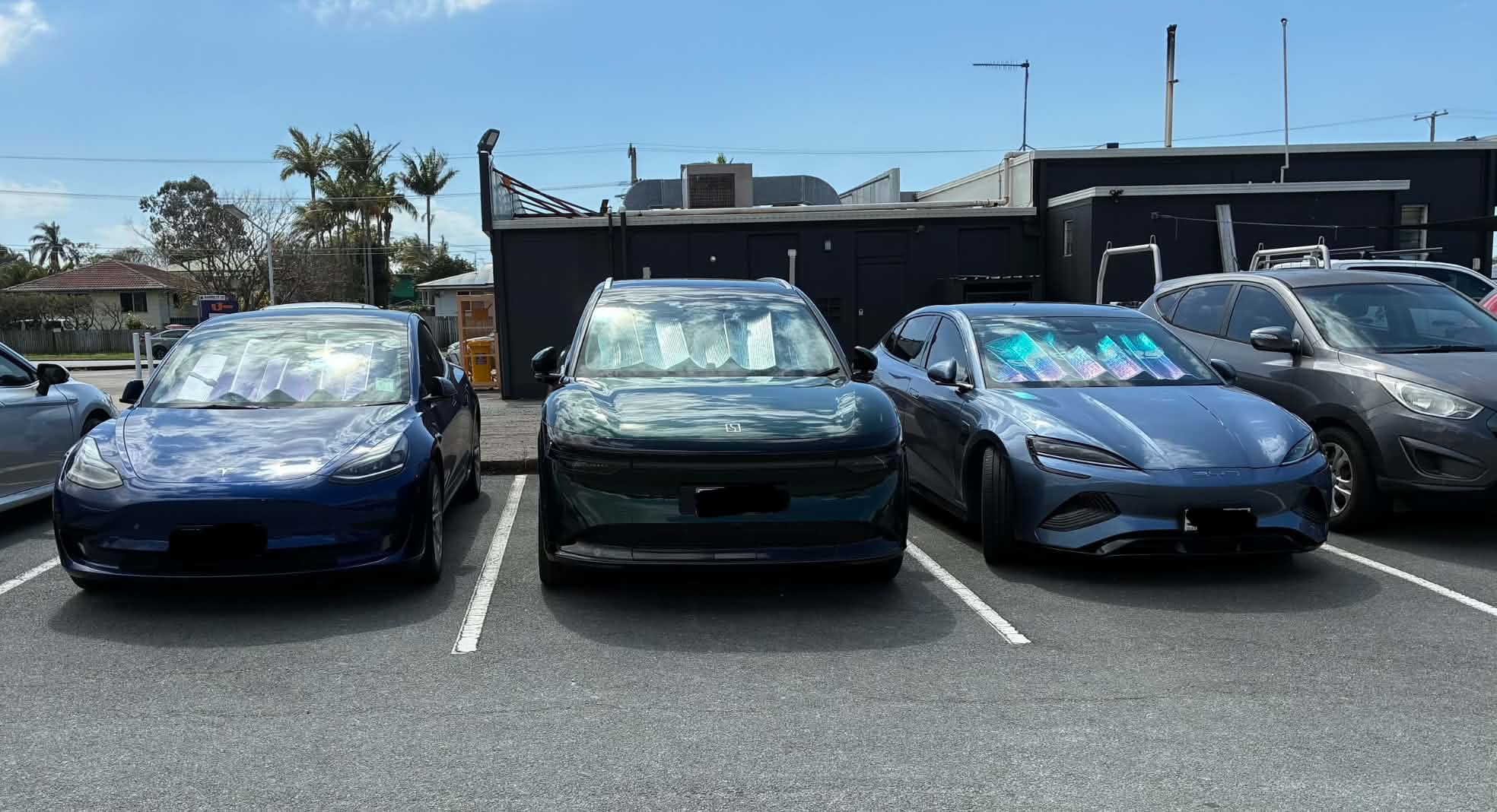
The top 5 best-selling plugin EVs in the Australian market over the past 12 months have been: Tesla Model Y (20,400), BYD Sealion 7 (12,500), BYD Shark 6 PHEV (9,500), Geely EX 5 (6,800), and Jaecoo J5 (6,000). I don’t expect this to change as we rush towards the end of the year. CleanTechnica readers would have been familiar with this lineup from regular reports. For the latest one, see here.
A comparison with CleanTechnica ’s figures and those of the EVC will demonstrate how rapidly sales are increasing. YTD figures of each model listed in the CleanTechnica report are almost double that in the EVC report.