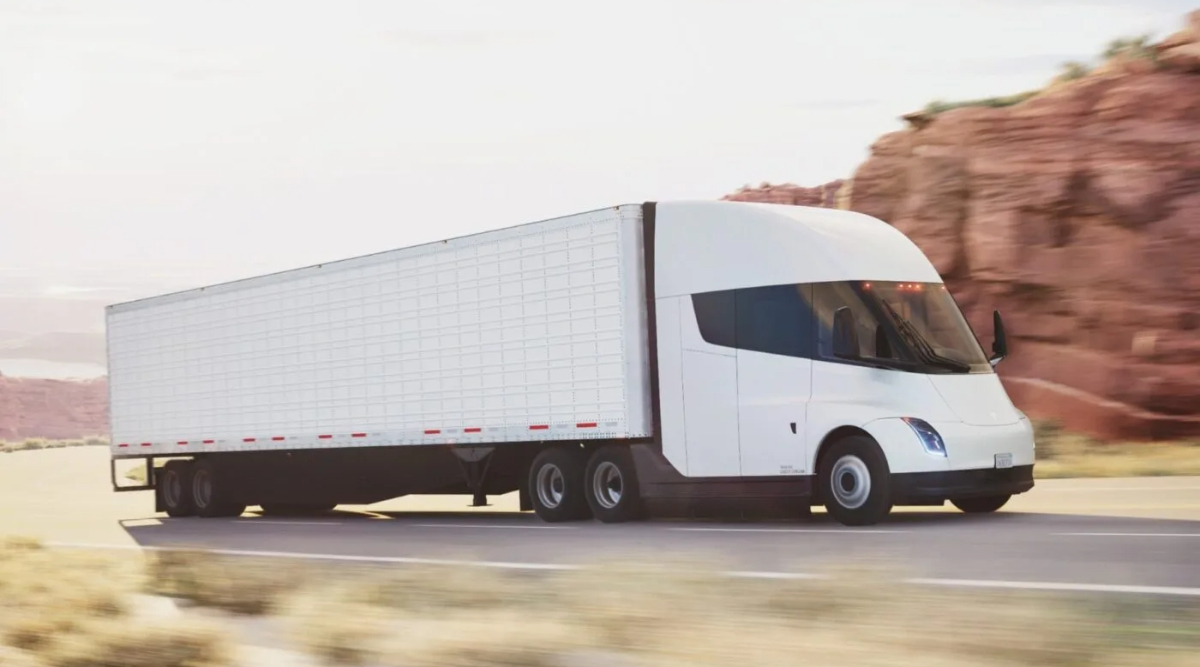
If you drove through the East Bay area of California on Tuesday night, you probably got caught in a nightmare. A Tesla Semi traveling down Interstate 880 in Hayward caught fire during the evening commute. There was no crash, no multi-vehicle pileup, and no obvious collision. The driver noticed something was wrong, pulled over near Highway 92, and got out unharmed.
📌 The Core Development
Then the lithium-ion pack did what high-energy battery chemistry does when it gets pushed past its thermal limits… By the time crews finished foaming down the wreckage, all that remained of the tractor was its rear axles and a pile of ash.
The California Highway Patrol shut down both directions of the freeway out of concern over toxic chemical smoke. Northbound lanes eventually opened back up, but southbound lanes stayed closed for nearly ten hours while fire crews managed the blaze and let the pack burn itself out. When the sun came up, all that remained of the tractor was its rear axles and a pile of ash.
🔍 Background & Sector Context
This is the second time in just over two years that a single Tesla Semi has shut down a major California highway for half a day. Back in August 2024, a Tesla-operated Semi drifted off Interstate 80 near Emigrant Gap, hit a tree, and caught fire. It took 50,000 gallons of water, air drops from Cal Fire, and a 15-hour closure to clear the road.
Whenever this happens, the anti-EV crowd immediately pounces and claims electric trucks are rolling time bombs. That’s a lie, as we’ve repeatedly explained here, but the knee-jerk reaction from tech enthusiasts, which claims this is just normal trucking business, is equally disconnected from reality.
📊 Industry & Real-World Impact
Something deeper is going on here, and it highlights an important cultural divide between Silicon Valley and the century-old world of heavy-duty commercial trucking. Instead of trashing people and pointing fingers, let’s look at a deeper lesson the industry can learn from this.
Benchmark Telemetry & EV Fuel Savings
Put top supercars and EVs to the test in The Pit Stop Lab — launch head-to-head 1/4-mile drag strip battles & compute EPA electric fuel cost savings.
⚡ Prefer Visual Stories on Mobile?
Experience this news piece in an interactive 5-slide visual format crafted for mobile devices & Google Discover.
🔮 Strategic Outlook & What Lies Ahead
According to the National Fire Protection Association, US fire departments respond to roughly 15,000 large truck fires every single year. That is about 40 diesel rigs catching fire every day across the country. Blown turbochargers spray oil on hot exhaust manifolds, wheel-end bearings seize at 70 mph, and dragging drum brakes ignite recap tires. Diesel trucks burn all the time, so fire is not a phenomenon unique to electric trucks.
The difference is how they burn. When a diesel tractor catches fire, the local volunteer fire department can usually knock it down with an engine tank and some foam in 45 minutes. A heavy tow truck drags the scorched chassis off the road, sweepers clear the debris, and traffic starts moving again before the morning rush hour is ruined.