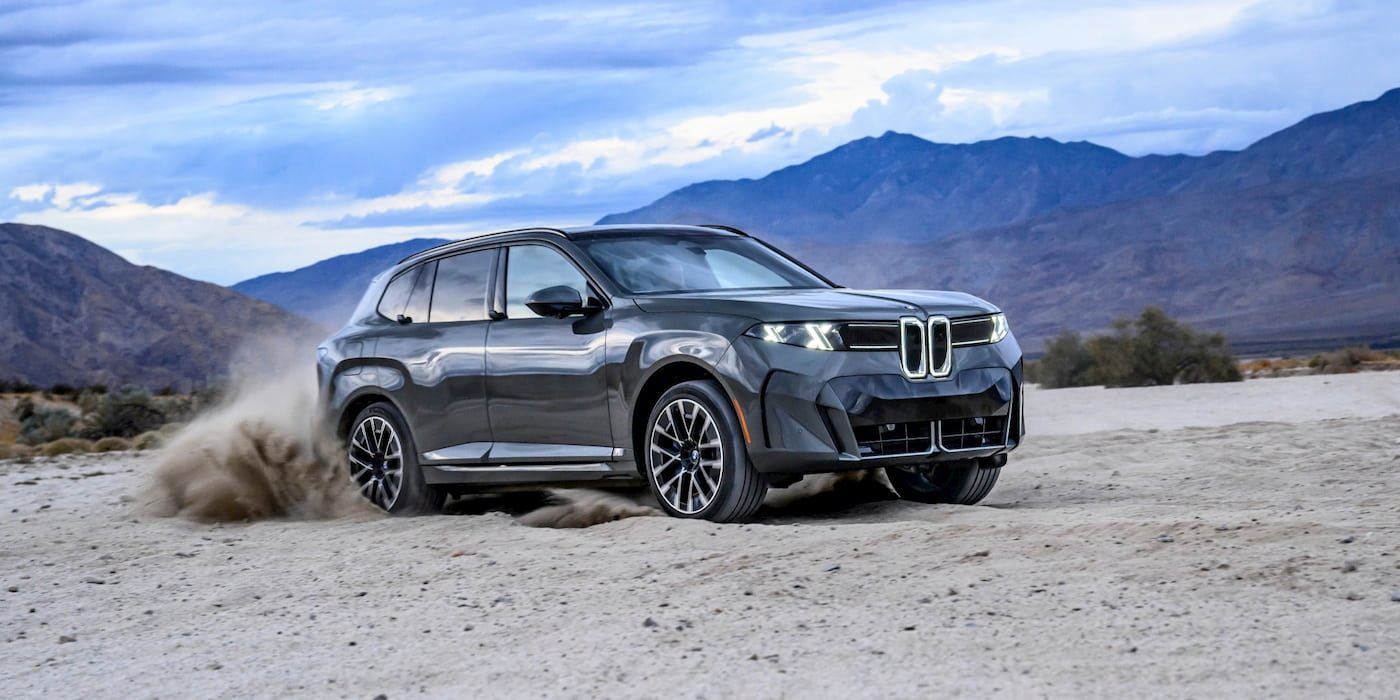
BMW’s new iX5 is hard to miss with its distinct Double-X headlights. Here’s how it stacks up against the outgoing X5, side by side.
📌 The Core Development
The X5 is among BMW’s best-selling vehicles in the US. In its fifth generation, it will be available across five powertrains.
In the US, it will be offered in gas, plug-in hybrid (PHEV), and, for the first time, battery electric (EV) powertrains. Other markets will also see diesel and hydrogen fuel cell variants.
🔍 Background & Sector Context
The gas-powered 2027 X5 40 xDrive is now available, starting at $72,100, but the electric iX5 won’t go on sale until November.
Ahead of its official launch next month, Bimmertoday posted several images of the new iX5 parked next to the outgoing X5 G05, giving us a good side-by-side comparison.
📊 Industry & Real-World Impact
Although it still looks like an X5, the new iX5 stands apart with BMW’s Neue Klasse design. The new upright, slimmer BMW Kidney Grille replaces the old wide, chunkier grille design.
⚡ Prefer Visual Stories on Mobile?
Experience this news piece in an interactive 5-slide visual format crafted for mobile devices & Google Discover.
🔮 Strategic Outlook & What Lies Ahead
You can also see BMW’s new “double-X” light signature, which combines the headlights, daytime running lights, side lights, and turn signals into one unit. The Double-X headlights come standard, but BMW said you can turn them off for simpler diagonal stripes.
The new BMW iX5 60 xDrive will go on sale in the US next month. Using a 144 kWh battery, BMW said the electric SUV will offer up to 435 miles of range.